Washington University in St Louis

Washington University in St Louis

Saint Louis, MO, USA
Private
4 Year

Overview

At WashU, you will join a community of achievers who inspire each other with their creativity and tenacity. You’ll acquire the knowledge, confidence, and skills to succeed as a professional and as a person, ready to change the world. You’ll learn from faculty leading their fields, and you’ll have the opportunity to work with them on research projects.


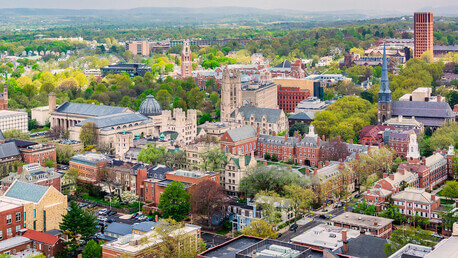
Located in St. Louis, Missouri, WashU offers undergraduate programs in the College of Arts & Sciences, Olin Business School, McKelvey School of Engineering, and Sam Fox School of Design & Visual Arts (College of Architecture and College of Art). Within these schools, you can choose from 100+ fields of study and more than 1,900 courses. Here, you’ll learn from world-renowned faculty, discover alongside classmates from across disciplines, and become a well-rounded individual prepared to make an impact in the world.


WashU meets 100 percent of demonstrated financial need with no-loan offers for all admitted undergraduate students. This means need-based loans are replaced with scholarships, grants, and federal work-study in your financial aid offer. In addition, we offer grants and campus store credit to offset costs associated with a new computer, school and housing supplies, and winter clothing. All students are automatically considered for an academic scholarship in the school they apply to for admission. Students may also apply to WashU's three Signature Scholar Programs—Danforth, Ervin, and Rodriguez Scholars—which bring together students from across campus to create unique academic and cultural communities.


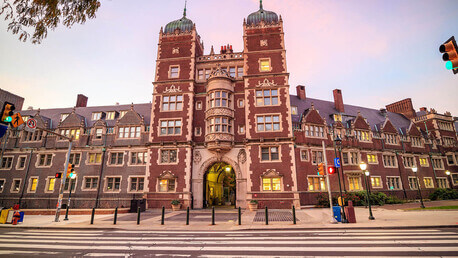
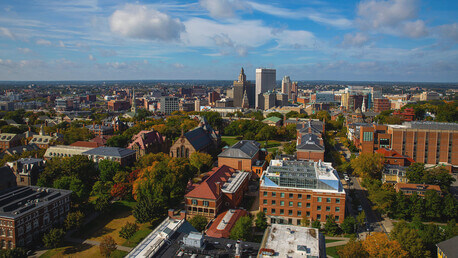
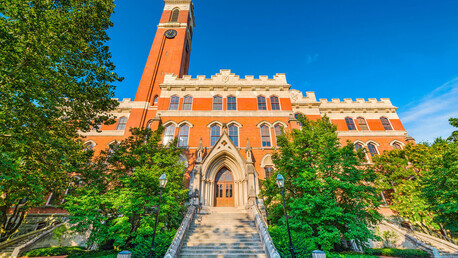
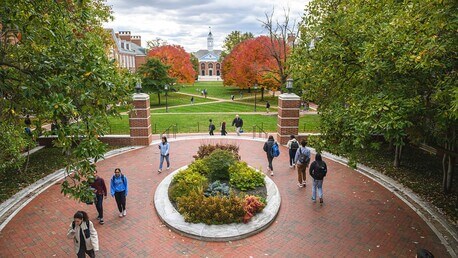
The best way to know if WashU feels right is to experience it yourself. Walk the campus. Talk with current students. Eat at the DUC. See what life here could really be like for you. Daily campus visits include an information session and a student-led campus tour, plus opportunities for additional experiences. Special events such as Academic Theme Days, Discover WashU Days, Junior Jumpstart, and more are offered throughout the year.


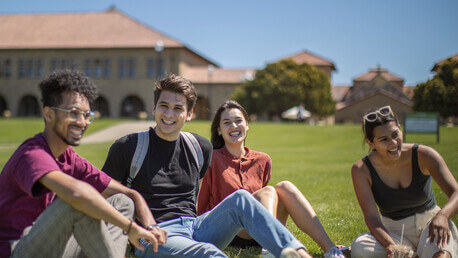
Whether you are exploring outside the classroom, participating in one of more than 450 student-led clubs and organizations, or landing an internship that propels you down your eventual career path: WashU is here to support you.

Acceptance Rate:
12%
Average Net Price:
$27,233
Campus Setting:
Suburb or town
Average GPA
4.0
Average ACT Composite
35
Average SAT Composite
1520

Virtual Tour

Tuition, Cost & Aid

Affordability & Cost

Average Net Price
$27,233
Calculate your net cost
Tuition
In-State Tuition In-state tuition is the tuition charged by institutions to those students who meet the state's or institution's residency requirements. In-district tuition is the tuition charged by the institution to those students residing in the locality in which they attend school and may be a lower rate than in-state tuition if offered by the institution.
$62,982
Out-of-State Tuition Out-of-state tuition is the tuition charged by institutions to those students who do not meet the state’s or institution’s residency requirements. Out-of-district tuition is the tuition charged by the institution to those students not residing in the locality in which they attend school.
$62,982
Additional Costs
Room and Board The weighted average for room and board and other expenses is generated as follows:
  • (amount for on-campus room, board and other expenses * # of students living on-campus.
  • + amount for off-campus (with family) room, board and other expenses * # of students living off-campus with family
  • + amount for off-campus (not with family) room, board and other expenses * # of students living off-campus not with family)
divided by the total # of students. Students whose living arrangements are unknown are excluded from the calculation. For some institutions the # of students by living arrangement will be known, but dollar amounts will not be known. In this case the # of students with no corresponding dollar amount will be excluded from the denominator.
$20,778
Books and Supplies
$1264
Average Net Price By Family Income
Income
Average Amount
< $30k
$5,716
$30k - $48k
$6,580
$48k - $75k
$9,528
$75k - $110k
$21,665
$110k+
$45,022
Financial Aid: visit page
Financial Aid Email: [email protected]

Aid & Grants

0
100
100%
Need Met
Students Receiving Gift Aid Percent of undergraduate students awarded federal gift aid. Federal gift aid includes any grant or scholarship aid awarded, from the federal government, a state or local government, the institution, and other sources known by the institution.
15%
Average Aid Per Year
$58,188
Students Receiving Grants Percent of undergraduate students awarded grant aid. Grant aid includes any grant or scholarship aid awarded, from the federal government, a state or local government, the institution, and other sources known by the institution.
15%
Average Federal Grant Aid Per Year
$8,389
Average Institution Grant Aid Per Year
$55,559


Students receiving state aid
8%
Average State Grant Aid Per Year
$3214
Students receiving federal aid
17%
Average Federal Grant Aid Per Year
$8,389
Average Grant & Scholarship By Family Income
Income
Average Amount
< $30k
$81,426
$30k - $48k
$83,322
$48k - $75k
$77,751
$75k - $110k
$63,215
$110k+
$36,117
Total Needs Based Scholarships/Grants Total amount of grant or scholarship aid awarded to all undergraduates from the federal government, state/local government, the institution, and other sources known to the institution.
$200,253,088
Total Non-Need-Based Scholarships/Grants
$12,755,240

Student Loans

Students Borrowing Loans Loans to students - Any monies that must be repaid to the lending institution for which the student is the designated borrower. Includes all Title IV subsidized and unsubsidized loans and all institutionally- and privately-sponsored loans. Does not include PLUS and other loans made directly to parents.
12%
Average Loan Amount Per Year
$9,495
Average Debt at Graduation The median federal debt of undergraduate borrowers who graduated. This figure includes only federal loans; it excludes private student loans and Parent PLUS loans.
$15,500
Median Monthly Loan Payment The median monthly loan payment for student borrowers who completed, if it were repaid over 10 years at a 5.05% interest rate.
$157
Students receiving federal loans
11%
Average Federal Loans Per Year
$5,162
Average Other Loans Per Year
$42,863


Admissions

Key Admissions Stats

Institution Type
Private
  • Not for Profit
  • Coed

Need Blind

This school does not consider an applicant’s financial situation when deciding admission

Level of Institution
4 Year
Campus Setting
Suburb or town
0
100
12%
Acceptance Rate
32014
Students Applied
20%
Transfer Acceptance Rate
113
Transfer Students Admitted

Admissions Requirements

SAT
SAT is not checked
No
ACT
ACT is not checked
No
Transcript
Transcript is checked
Yes
Test Optional
Item is checked
Yes
SAT Subject Tests
Item is checked
Yes
AP Course Credit
Item is checked
Yes
Dual Enrollment
Item is not checked
No

Important Deadlines

Application TypeApplication DeadlineReply Deadline
Early Decision Acceptance is binding so student must attend college if accepted.November 1
Fall Regular DecisionJanuary 2May 1
OtherJanuary 2
Application Fee
$75
Fee waivers available
Applications Accepted
Common Application
Common Application
Coalition Application

Admitted Student Stats

In-State Students
12%
Out-Of-State Students
88%
33%
Submitting ACT
27%
Submitting SAT
Average ACT Composite: 35
0
36
Average SAT Composite: 1520
0
1600
SAT Percentiles

Math
25th
770
75th
800
Reading
25th
730
75th
770
4.0
Average GPA
Students Enrolled By GPA

3.75+
85%
3.50 - 3.74
11%
3.25 - 3.49
3%
3.00 - 3.24
1%
Students Enrolled By Class Rank

Top 10%
89
Top 25%
99
Top 50%
100

Admissions Resources

Admissions: visit page
Admissions Email: [email protected]
Admissions Telephone: 800-638-0700
For International Student Services: visit page
For Students with Disabilities: visit page
For Veteran Services: visit page

Academics

Key Academic Stats

Highest Degree Offered
Doctorate
Total Number of Students
17,012
Total Number of Undergrads
8,132
0
100
88%
Graduate in 4 Years US National: 28%
0
100
94%
Graduate in 6 Years US National: 52%
Student:Faculty Ratio
7:1
US National: 21:1
Academic Calendar

Semester

Non Traditional Learning
  • Online Classes
  • Online Undergrad Degrees
  • Summer Sessions
  • Combined Institution Double Degree Programs
Learning Options
  • ROTC Army
  • ROTC Air Force
  • Study Abroad
  • Teacher Certification Offered
Classroom Sizes

2-19 Students
63%
20-39 Students
16%
40-99 Students
15%
100+ Students
3%
 

Degrees and Majors

MAJORS
160

Faculty Overview

0
100
69%
Faculty With Terminal Degree US National: 36%
Gender
Male
Female
Ethnicity

African American
Asian/Pacific Islander
White
Hispanic
Multi-Racial

Campus Life

Key Campus Stats

Student Gender
Male
Female
45%
55%
Residency
In-State Students
12%
Out-Of-State Students
88%
Size of Town
Suburb or town
US States Represented
54
Countries Represented
50
Ethnicity
African American
9%
Asian/Pacific Islander
20%
Hispanic
12%
White
44%
Multiracial
6%
Unknown
2%
Percent of First Generation Students
11%
Student Organizations
465
LGBTQIA Student Resource Groups
Item is checked
Yes
On Campus Women's Center
Item is not checked
No
Cultural Student Resource Groups
Item is checked
Yes

Housing

0
100
74%
Undergrads Living on Campus
On-campus living required of freshman
No
Disability Housing Available
Yes
0
100
70%
Freshman Living on Campus

Athletics

Divisional Sports Nickname
Bears
School Colors
red and green
Varsity Athletics Association
NCAA
Varsity Athletics Conference Primary
College Conference of Illinois and Wisc
Total Male Athletes
311
Total Female Athletes
202
Intramural Sports
13
Sports Club
9
Sports Team (Men)
  • Baseball
  • Basketball
  • Cross Country
  • Football
  • Soccer
  • Swimming
  • Tennis
  • Track and Field
Sports Team (Women)
  • Basketball
  • Cross Country
  • Golf
  • Soccer
  • Softball
  • Swimming
  • Tennis
  • Track and Field
  • Volleyball
Washington University in St Louis Athletics: visit page

Campus Safety

24-HR security patrol
24-HR security patrol is checked
Yes
Campus emergency phones
Campus emergency phones is checked
Yes
24-HR escort safety rides
Item is checked
Yes
Mobile campus emergency alert
Item is checked
Yes

After Graduation

Post Grad Stats

Average Salary
6 years after graduation
$87,900
Top 5 Cities
Saint Louis
New York
Chicago
San Francisco
Washington
Top 5 Employers
Washington University in St. Louis
Boeing
Washington University School of Medicine
Monsanto Company
Google
Top 5 Sectors
Business Development
Education
Research
Healthcare Services
Engineering
Average Debt at Graduation The median federal debt of undergraduate borrowers who graduated. This figure includes only federal loans; it excludes private student loans and Parent PLUS loans.
$15,500
Loan Default Rate
2%
National: 8%
Median Monthly Loan Payment The median monthly loan payment for student borrowers who completed, if it were repaid over 10 years at a 5.05% interest rate.
$157
The classes I have taken have been interesting and challenging. It's a good idea to do some research on the professor, but generally you can expect a good experience. Class size really varies. I've had classes with 12 students, but also classes with 100+. Typically this doesn't affect the quality of the course, or at least it hasn't in my experience.
Catlyne from Wheaton, IL
Wash U is a challenging school, with numerous possibilities. Since it's not a large school, class size is generally smaller, which creates a great learning environment. The handful of large lecture style classes are still very effective, often with a lab or small section to aid your learning. All the professors are knowledgeable, resourceful, and helpful. If you're looking for a great education, you will no doubt find it here.
Rebecca from Fort Collins, CO
Given that this is a top private university in the States, only the best professors and educators are hired to lecture at the school. Outside of the classroom, many research based major programs allow you to attend seminars, symposiums and events to learn about research in that discipline. Inside the classroom students are able to learn from a range of very qualified professors, all highly enthusiastic about the subject that they teach. I love knowing that my economics professor uses the concepts we learn in class to explain her reasoning to her kids. My anthropology professor often showed pictures from his research in Mexico to aid with our discussions on culture and the environment. Furthermore, I enjoy knowing that my accounting professor was a former CFO and that my statistics professor likes card games and roulette. Their enthusiasm combined with a plethora of research centers in many disciplines allows me to learn as much as I choose and constantly ask questions.
Female Student from Atlanta, GA
The classes here can be quite demanding; however, in the end, the hard work is worth it. While for the majority of students, long hours of studying are probably necessary to succeed, Washington University assists with the learning process by offering a plethora of academic resources, such as free tutoring and academic mentoring for (almost) any class. In addition, many of the professors have a lot of knowledge to impart, as they are true experts in their field. Of course, some are better than others, but for the most part, the instructors are very knowledgeable about their subjects, and many of them show great enthusiasm for what they do, which I find makes it much easier and more exciting to learn. There is a large array of courses to take, and students, especially freshmen, are encouraged to explore their interests. In fact, at least for Arts and Sciences students, there is only one general education requirement—Writing I—so they have great freedom to discover what their passion is and can continue to learn more about that passion.
Angela from O'Fallon, IL
Washington University in St. Louis is filled with intelligent students looking to challenge themselves. The campus is gorgeous and the food is phenomenal. There are also endless clubs, teams and organizations encouraging student involvement!
Katherine from New York, NY
Washington University offers a variety of classes for their students. The classes are challenging, but not overwhelming. Usually students take anywhere from 12-19 credits. The professors teach by examples, explanations, and assigned reading. Classes will also have guest speakers and demonstrations. Learning is definitely a large part of coming to this university.
Briana
The most important part of the academic environment here is how collaborative the students are. The campus at all times is littered with students engaged in group study sessions and meetings with professors or teaching assistants. Wash U provides all kinds of resources for academic help, such as Peer Led Team Learning, where an upperclassman helps other students in math and science courses understand problem sets. Residential Peer Mentors for all the main subjects are easily accessible, sometimes even at midnight for one on one meetings in all residential colleges. Whenever I am even slightly struggling on campus, I am rarely stressed because I know how much is available to help me succeed. Overall, the classes are unlimited and overall, very engaging. Not only am I learning material, but I am learning how to be the best student I can be at Wash U.
Carly from Santa Ana, CA
Wash U, as it is called, offers students unique opportunities that, I believe, no other college can. It truly has an international, or a global, community: you get to interact with some of the best minds from across the nation, as well as outside of the U.S. (some international students on my freshman year floor were from Paraguay, China, and Japan). Lastly, Wash U is known to its students as the U.S.'s best-kept secret, for Wash U is certainly on or near the level of Ivy League Colleges and well-known universities--such as Duke, Vanderbilt, and Notre Dame--but is far less well-known, making it a hot-spot for the diverse and creative minds who are more interested in the process of learning itself than on the perks and superficial bonuses that may come with attending a more well-known university.
Lindsay from Plymouth, MN
I'm currently a freshman in the Olin business school and from what I've encountered, the professors here are great! Their lectures are pretty entertaining and informative at the same time. If you don't get something in class, always go to their office hours. They are very approachable WILL help you out. All I have to say is, I learned more in these few months than I did in my 5 years of high school.
Yuwei from St. Louis, MO
The quality of education I have received at Washington University has been amazing, which I assume is why most people consider Wash U. The faculty there have done real research and are experts in their fields, which has in turn allowed my understanding of different subjects to flourish. However, while the education is around the same caliber, it doesn't have the same name recognition as ivy league schools, I sometimes question the use of my tuition money (extensive lawn care, while beautiful, comes at a high price and is a bit excessive around campus), and a lack of grade inflation puts you at a disadvantage when competing against students from other schools for medical school and other fields that look at GPA.
Andrew from Dahlgren, IL