The University of Texas at Austin

The University of Texas at Austin

Austin, TX, USA
Public
4 Year

Overview

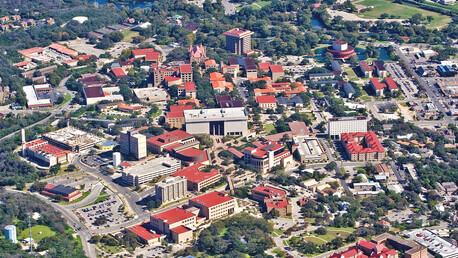
A Public Ivy and space-grant institution, the University of Texas at Austin is one of nine academic universities in the UT system, and also the first. Founded in 1883 and home to 18 schools and colleges, it is one of the largest schools in the US but is also one of the more selective. There are more than 170 undergraduate fields of study and 400 study abroad programs in 78 countries. The main Austin campus is 431-acres and contains 17 libraries, 4 museums, and 15 career centers. UT Austin also maintains Creative 40 Acres, a space for students creative work, as well as Longhorn Startup, to foster interdisciplinary startup innovation.  

Acceptance Rate:
31%
Average Net Price:
$16,892
Campus Setting:
Major city
Average GPA
3.8
Average ACT Composite
30
Average SAT Composite
1367

Virtual Tour

Tuition, Cost & Aid

Affordability & Cost

Average Net Price
$16,892
Calculate your net cost
Tuition
In-State Tuition In-state tuition is the tuition charged by institutions to those students who meet the state's or institution's residency requirements. In-district tuition is the tuition charged by the institution to those students residing in the locality in which they attend school and may be a lower rate than in-state tuition if offered by the institution.
$11,678
Out-of-State Tuition Out-of-state tuition is the tuition charged by institutions to those students who do not meet the state’s or institution’s residency requirements. Out-of-district tuition is the tuition charged by the institution to those students not residing in the locality in which they attend school.
$42,778
Additional Costs
Room and Board The weighted average for room and board and other expenses is generated as follows:
  • (amount for on-campus room, board and other expenses * # of students living on-campus.
  • + amount for off-campus (with family) room, board and other expenses * # of students living off-campus with family
  • + amount for off-campus (not with family) room, board and other expenses * # of students living off-campus not with family)
divided by the total # of students. Students whose living arrangements are unknown are excluded from the calculation. For some institutions the # of students by living arrangement will be known, but dollar amounts will not be known. In this case the # of students with no corresponding dollar amount will be excluded from the denominator.
$14,136
Books and Supplies
$724
Average Net Price By Family Income
Income
Average Amount
< $30k
$12,157
$30k - $48k
$14,135
$48k - $75k
$17,258
$75k - $110k
$25,597
$110k+
$28,408
Financial Aid: visit page
Financial Aid Email: [email protected]

Aid & Grants

0
100
77%
Need Met
Students Receiving Gift Aid Percent of undergraduate students awarded federal gift aid. Federal gift aid includes any grant or scholarship aid awarded, from the federal government, a state or local government, the institution, and other sources known by the institution.
24%
Average Aid Per Year
$8,321
Students Receiving Grants Percent of undergraduate students awarded grant aid. Grant aid includes any grant or scholarship aid awarded, from the federal government, a state or local government, the institution, and other sources known by the institution.
24%
Average Federal Grant Aid Per Year
$3,358
Average Institution Grant Aid Per Year
$6,238


Students receiving state aid
20%
Average State Grant Aid Per Year
$8144
Students receiving federal aid
85%
Average Federal Grant Aid Per Year
$3,358
Total Needs Based Scholarships/Grants Total amount of grant or scholarship aid awarded to all undergraduates from the federal government, state/local government, the institution, and other sources known to the institution.
$230,581,888
Total Non-Need-Based Scholarships/Grants
$25,776,751

Student Loans

Students Borrowing Loans Loans to students - Any monies that must be repaid to the lending institution for which the student is the designated borrower. Includes all Title IV subsidized and unsubsidized loans and all institutionally- and privately-sponsored loans. Does not include PLUS and other loans made directly to parents.
29%
Average Loan Amount Per Year
$5,851
Average Debt at Graduation The median federal debt of undergraduate borrowers who graduated. This figure includes only federal loans; it excludes private student loans and Parent PLUS loans.
$17,844
Median Monthly Loan Payment The median monthly loan payment for student borrowers who completed, if it were repaid over 10 years at a 5.05% interest rate.
$187
Students receiving federal loans
28%
Average Federal Loans Per Year
$5,052
Average Other Loans Per Year
$19,848


Admissions

Key Admissions Stats

Institution Type
Public
  • Not for Profit
  • Coed

Need Aware

This school may consider an applicant’s financial situation when deciding admission

Level of Institution
4 Year
Campus Setting
Major city
0
100
31%
Acceptance Rate
60055
Students Applied
24%
Transfer Acceptance Rate
1743
Transfer Students Admitted

Admissions Requirements

SAT
SAT is not checked
No
ACT
ACT is not checked
No
Transcript
Transcript is checked
Yes
Test Optional
Item is checked
Yes
SAT Subject Tests
Item is checked
Yes
AP Course Credit
Item is checked
Yes
Dual Enrollment
Item is checked
Yes

Important Deadlines

Application TypeApplication DeadlineReply Deadline
Fall Regular DecisionDecember 1May 15
Spring Regular DecisionOctober 1
OtherMarch 1May 1
Application Fee
$75
Fee waivers available
Applications Accepted
State-Specific Application
Coalition Application

Admitted Student Stats

In-State Students
88%
Out-Of-State Students
6%
22%
Submitting ACT
63%
Submitting SAT
Average ACT Composite: 30
0
36
Average SAT Composite: 1367
0
1600
SAT Percentiles

Math
25th
610
75th
770
Reading
25th
620
75th
730
3.8
Average GPA
Students Enrolled By Class Rank

Top 10%
86
Top 25%
96
Top 50%
99
Students Enrolled By Household Income

< $30k
1114
$30k - $48k
632
$48k - $75k
671
$75k - $110k
488
$110k+
859

Admissions Resources

Admissions: visit page
Admissions Email: [email protected]
Admissions Telephone: 512-475-7399
For International Student Services: visit page
For Students with Disabilities: visit page
For Veteran Services: visit page

Academics

Key Academic Stats

Highest Degree Offered
Doctorate
Total Number of Students
52,384
Total Number of Undergrads
41,309
0
100
70%
Graduate in 4 Years US National: 28%
0
100
88%
Graduate in 6 Years US National: 52%
Student:Faculty Ratio
18:1
US National: 21:1
Academic Calendar

Semester

Non Traditional Learning
  • Online Classes
  • Online Undergrad Degrees
  • Summer Sessions
  • Combined Institution Double Degree Programs
  • Some Programs Requires Co-Op/Internship
Learning Options
  • ROTC Army
  • ROTC Air Force
  • Study Abroad
  • Honors Program
  • Teacher Certification Offered
Classroom Sizes

2-19 Students
34%
20-39 Students
32%
40-99 Students
22%
100+ Students
9%
 

Degrees and Majors

MAJORS
166

Faculty Overview

0
100
86%
Faculty With Terminal Degree US National: 36%
Gender
Male
Female
Ethnicity

African American
Asian/Pacific Islander
White
Hispanic
Multi-Racial

Campus Life

Key Campus Stats

Student Gender
Male
Female
43%
57%
Residency
In-State Students
88%
Out-Of-State Students
6%
Size of Town
Major city
US States Represented
55
Countries Represented
121
Ethnicity
African American
5%
Asian/Pacific Islander
24%
Hispanic
28%
White
33%
Multiracial
4%
Unknown
1%
Percent of First Generation Students
28%
Student Organizations
1039
LGBTQIA Student Resource Groups
Item is checked
Yes
On Campus Women's Center
Item is checked
Yes
Cultural Student Resource Groups
Item is checked
Yes

Housing

0
100
18%
Undergrads Living on Campus
On-campus living required of freshman
No
Disability Housing Available
Yes
0
100
17%
Freshman Living on Campus

Athletics

Divisional Sports Nickname
Longhorns
School Colors
burnt orange and white
Varsity Athletics Association
NCAA
Varsity Athletics Conference Primary
Big Twelve Conference
Total Male Athletes
341
Total Female Athletes
341
Intramural Sports
29
Sports Club
76
Sports Team (Men)
  • Baseball
  • Basketball
  • Football
  • Golf
  • Swimming
  • Tennis
  • Track and Field
Sports Team (Women)
  • Basketball
  • Crew-Rowing
  • Golf
  • Soccer
  • Softball
  • Swimming
  • Tennis
  • Track and Field
  • Volleyball
The University of Texas at Austin Athletics: visit page

Campus Safety

24-HR security patrol
24-HR security patrol is checked
Yes
Campus emergency phones
Campus emergency phones is checked
Yes
24-HR escort safety rides
Item is checked
Yes
Mobile campus emergency alert
Item is checked
Yes

After Graduation

Post Grad Stats

Average Salary
6 years after graduation
$73,900
Top 5 Cities
Austin
Dallas
New York
Houston
San Francisco
Top 5 Employers
The University of Texas at Austin
Dell
IBM
Apple
Google
Top 5 Sectors
Engineering
Information Technology
Business Development
Sales
Arts and Design
Average Debt at Graduation The median federal debt of undergraduate borrowers who graduated. This figure includes only federal loans; it excludes private student loans and Parent PLUS loans.
$17,844
Loan Default Rate
4%
National: 8%
Median Monthly Loan Payment The median monthly loan payment for student borrowers who completed, if it were repaid over 10 years at a 5.05% interest rate.
$187
I know you are hearing all about how big UT is and how big the classes are and how big campus is. All this might be a little intimidating and even scary for you! But no worries! There will certainly be one or two classes that you will have that are just humongous! But there are also other classes that aren’t that bad. The trick first is to join a FIG! They are programs that reserve smaller classes for students who sign up and you get to go to many classes with the same group of people. I am part of a program that is similar to a FIG called Gateway. That's where I met 5 of my really good friends! Also, it will help a lot if you use websites such as pick-a-prof because the student reviews and ratings are mostly accurate! This website allows you to search your class and the teachers who have taught it and it also gives you a breakdown (in %) of the grades that the professor has given. You don't want to get stuck with a professor that you could have avoided by using the website! Lastly, when you are finally in the classroom, I suggest you bring a laptop to take notes because the teacher talks really fast. However, if you are easily distracted then it’s not such a good idea. Also, I have also been told and learned from experience that reviewing your notes just 5 minutes every day will help you remember everything a lot better than waiting until the night before a test to cram! One last thing! Sit in front! That way,
1. the professor knows that you have been to class all semester long so if any issues arise, they are more likely to help you out
2. you won’t be distracted and
3. You can hear better!
Goodluck and have fun!
Lila from Houston, TX
Because the university is so large, many undergrads will only have the chance to take large lecture classes for a few semesters. In these types of classes, it is up to the student to learn the material on his own. With classes this size, however, there are most likely always study groups for homework, tests, etc. Basically, the amount you learn is up to you.
Shannon from Missouri City, TX
The University of Texas at Austin (UT) was named a Public Ivy meaning that you can get a very good education at a public university. From my experience at UT, I believe that the title is well deserved. I am currently enrolled in the Cockrell School of Engineering, and I can tell you for sure that the faculty, staff, and resources here at the school are top-notch (My basis for comparison largely comes from my experience at the University of North Texas).

Of course, there are always those more general classes, also known as 'freshmen' courses, that are sometimes not always so great. Because the classes are so big for these courses, I think there is more of a disconnect between the students and teachers, but that's my opinion on it. These courses are the only reason why I have deducted a star from learning, but in the end as you get further along in your major, the professors do become a lot better.
Brendan from Kennedale, TX
There are a lot of different classes that they offer at UT tha tmight not be towards your degree but are fun and can count towards your elective courses. For instance, there's scubadiving, musical instrument classes, and physical education classes.
Aside from learning in the courses, there are over 900 student organizations on campus. There's practically an organization for everything - just think of it, and you'll find it.
Joining and organization is a great way to make new friends and learn new things. I joined a business organization and every week there is a different company that comes to the meeting and talks about their company and different jobs that are offered at the company. Plus, it helps to network with those companies to land an internship in the future.
Jacklyn from Houston, TX
Your professors are experts in their fields, and bring an exuberance to classes that were rare in high school classes. They also make sure to provide you with the tools to succeed and inspire you to continue learning even after the class is over.
Cailun from Houston, TX
The classes, while crammed full of information, are taught by exceptional professors who know how to teach. These professors work with you, taking time from their day and even making special arrangements to meet with you, to help you better understand everything you need to know and more. The professors are people who in their free time continue to explore their respective fields, and thus, teach from their actual experiences.
Rachel from Carrollton, TX
UT has so much to offer to every kind of student. UT has a balance between social opportunities and academic opportunities. With more than 40,000 undergraduate students, the school provides so much diversity.
Brandon from Pearland, TX
As a student at the University of Texas at Austin, I have been afforded the opportunity to learn so much in the time that I have been here. I have met people from many walks of life and many different ethnic groups—many professors, teacher’s assistants, mentors, advisers, students, etc. As an African-American student, I have realized that culture is very important to me. I yearned to learn more. I have, since my entrance into the University, changed my major from Psychology to African/African-American Studies. Making this change was groundbreaking for me as it allows me to delve more into a lost culture of my own that I was not previously aware of. Participating in Ethnic Studies also lets me learn of other people’s art, literature, music, systems of beliefs, values and principles. I am now able to view the world with a more oppositional gaze contrary to the way I have been conditioned to see things. Many of these same professors, mentors, advisers and peers have had a great influence on me and have taught me so much throughout my journey thus far at UT Austin; not just academically, but socially, emotionally, spiritually and mentally. There are so many academic opportunities at UT to continue your academic growth. There is the University of Texas Learning Center (UTLC) where students are allowed a decent number of FREE tutoring hours with peers and upperclassmen who specialize in particular subjects. There is also the Undergraduate Writing Center (UWC) where students are allowed to meet with English/Rhetoric and Writing students, graduate students and instructors to get help with papers. Both of these resources have been of great help to me! Also, the Career Exploration Center is a very awesome resource to find out where you should go with your career or to figure out what career path to take. I have definitely been a regular attendee of said office. I have learned above all to utilize all of my resources!
Mirakol S. from Dallas, TX
I am not only learning a ton inside the classroom, but UT Austin teaches you skills outside academics as well. Professors may be brutal, but they teach you to get your work done on time and with exceptional quality or you'll suffer the consequences. They teach independence. They teach you to ask for help when you need it, which inadvertently teaches you that if you don't, your GPA will show it. I've learned to take initiative when I need help with something. I've learned to manage my time and stress. I've learned that working hard and not giving up on Physics, which I was near positive I would fail, will pay off, even if it was only with a C. I've learned to not concern myself with things I can't control, along with making the absolute best of the things I can. I've learned all of this, along with a solid semester of Calculus 2, Physics and Chemistry. I wouldn't trade it for the world!
Marissa from Burleson, TX
The University of Texas at Austin has some of the best lectures in the world! It&#39;s surrounded by the wonderful Austin culture, and beautiful scenery. It&#39;s a tough and rigorous school, with loving teachers and friendly students.
Michael from San Antonio, TX