Emory University
Emory University

Emory University

Atlanta, GA, USA
Private
4 Year

Overview

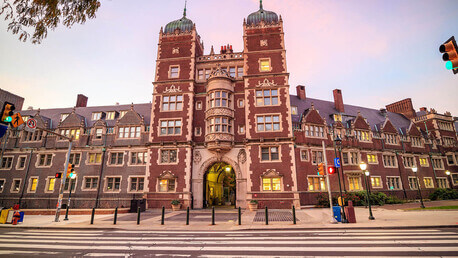
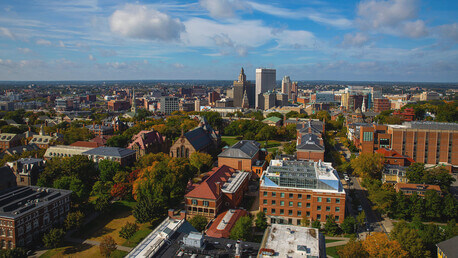
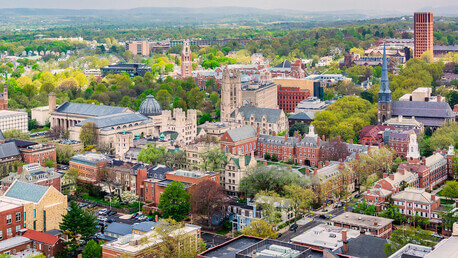
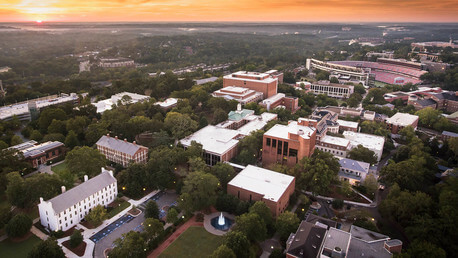
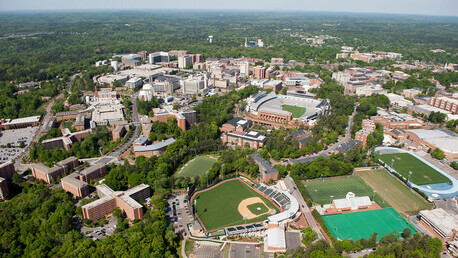
Emory University is a liberal arts institution located in Atlanta, Georgia, with a second campus in Oxford. The 600-acre campus in the Druid Hills neighborhood is home to four undergraduate and seven graduate colleges, as well as over a dozen research centers and facilities that provide more than half of Emory undergraduates with research opportunities. The Atlanta campus offers Bachelor’s of both arts and sciences, BSNs and BBAs, while the Oxford College campus offers associate’s of arts, altogether providing more than 70 majors and 50 minors. With a campus located only three miles from downtown Atlanta, students can utilize the 2,000 internship opportunities in the city or expand their horizons through the 135 study abroad programs outside of it. Emory University applies sustainability measures around campus as well as within the classroom, including sustainability courses in 61% of its departments.

Acceptance Rate:
11%
Average Net Price:
$25,672
Campus Setting:
Major city
Average GPA
3.8
Average ACT Composite
32
Average SAT Composite
1453

Virtual Tour

Tuition, Cost & Aid

Affordability & Cost

Average Net Price
$25,672
Calculate your net cost
Tuition
In-State Tuition In-state tuition is the tuition charged by institutions to those students who meet the state's or institution's residency requirements. In-district tuition is the tuition charged by the institution to those students residing in the locality in which they attend school and may be a lower rate than in-state tuition if offered by the institution.
$60,774
Out-of-State Tuition Out-of-state tuition is the tuition charged by institutions to those students who do not meet the state’s or institution’s residency requirements. Out-of-district tuition is the tuition charged by the institution to those students not residing in the locality in which they attend school.
$60,774
Additional Costs
Room and Board The weighted average for room and board and other expenses is generated as follows:
  • (amount for on-campus room, board and other expenses * # of students living on-campus.
  • + amount for off-campus (with family) room, board and other expenses * # of students living off-campus with family
  • + amount for off-campus (not with family) room, board and other expenses * # of students living off-campus not with family)
divided by the total # of students. Students whose living arrangements are unknown are excluded from the calculation. For some institutions the # of students by living arrangement will be known, but dollar amounts will not be known. In this case the # of students with no corresponding dollar amount will be excluded from the denominator.
$18,972
Books and Supplies
$1250
Average Net Price By Family Income
Income
Average Amount
< $30k
$11,865
$30k - $48k
$10,362
$48k - $75k
$15,337
$75k - $110k
$24,620
$110k+
$42,732
Financial Aid: visit page
Financial Aid Email: [email protected]

Aid & Grants

0
100
98%
Need Met
Students Receiving Gift Aid Percent of undergraduate students awarded federal gift aid. Federal gift aid includes any grant or scholarship aid awarded, from the federal government, a state or local government, the institution, and other sources known by the institution.
19%
Average Aid Per Year
$48,914
Students Receiving Grants Percent of undergraduate students awarded grant aid. Grant aid includes any grant or scholarship aid awarded, from the federal government, a state or local government, the institution, and other sources known by the institution.
19%
Average Federal Grant Aid Per Year
$7,154
Average Institution Grant Aid Per Year
$46,482


Students receiving state aid
10%
Average State Grant Aid Per Year
$6109
Students receiving federal aid
18%
Average Federal Grant Aid Per Year
$7,154
Average Grant & Scholarship By Family Income
Income
Average Amount
< $30k
$68,536
$30k - $48k
$70,088
$48k - $75k
$63,130
$75k - $110k
$51,661
$110k+
$26,623
Total Needs Based Scholarships/Grants Total amount of grant or scholarship aid awarded to all undergraduates from the federal government, state/local government, the institution, and other sources known to the institution.
$167,187,536
Total Non-Need-Based Scholarships/Grants
$19,565,263

Student Loans

Students Borrowing Loans Loans to students - Any monies that must be repaid to the lending institution for which the student is the designated borrower. Includes all Title IV subsidized and unsubsidized loans and all institutionally- and privately-sponsored loans. Does not include PLUS and other loans made directly to parents.
22%
Average Loan Amount Per Year
$7,280
Average Debt at Graduation The median federal debt of undergraduate borrowers who graduated. This figure includes only federal loans; it excludes private student loans and Parent PLUS loans.
$15,000
Median Monthly Loan Payment The median monthly loan payment for student borrowers who completed, if it were repaid over 10 years at a 5.05% interest rate.
$157
Students receiving federal loans
21%
Average Federal Loans Per Year
$5,056
Average Other Loans Per Year
$22,516


Admissions

Key Admissions Stats

Institution Type
Private
  • Not for Profit
  • United Methodist
  • Coed

Need Aware

This school may consider an applicant’s financial situation when deciding admission

Level of Institution
4 Year
Campus Setting
Major city
0
100
11%
Acceptance Rate
33179
Students Applied
25%
Transfer Acceptance Rate
137
Transfer Students Admitted

Admissions Requirements

SAT
SAT is not checked
No
ACT
ACT is not checked
No
Transcript
Transcript is checked
Yes
Test Optional
Item is checked
Yes
SAT Subject Tests
Item is checked
Yes
AP Course Credit
Item is checked
Yes
Dual Enrollment
Item is checked
Yes

Important Deadlines

Application TypeApplication DeadlineReply Deadline
Early Decision Acceptance is binding so student must attend college if accepted.November 1
Fall Regular DecisionJanuary 1May 1
OtherJanuary 1
Application Fee
$75
Fee waivers available
Applications Accepted
Common Application
Common Application
Coalition Application

Admitted Student Stats

In-State Students
11%
Out-Of-State Students
84%
24%
Submitting ACT
41%
Submitting SAT
Average ACT Composite: 32
0
36
Average SAT Composite: 1453
0
1600
SAT Percentiles

Math
25th
730
75th
790
Reading
25th
700
75th
760
3.8
Average GPA
Students Enrolled By GPA

3.75+
67%
3.50 - 3.74
26%
3.25 - 3.49
6%
3.00 - 3.24
1%
Students Enrolled By Class Rank

Top 10%
84
Top 25%
14
Top 50%
2

Admissions Resources

Admissions: visit page
Admissions Email: [email protected]
Admissions Telephone: 800-727-6036
For International Student Services: visit page
For Students with Disabilities: visit page

Academics

Key Academic Stats

Highest Degree Offered
Doctorate
Total Number of Students
14,841
Total Number of Undergrads
7,101
0
100
82%
Graduate in 4 Years US National: 28%
0
100
90%
Graduate in 6 Years US National: 52%
Student:Faculty Ratio
9:1
US National: 21:1
Academic Calendar

Semester

Non Traditional Learning
  • Online Classes
  • Online Undergrad Degrees
  • Summer Sessions
  • Combined Institution Double Degree Programs
Learning Options
  • Study Abroad
  • Honors Program
Classroom Sizes

2-19 Students
56%
20-39 Students
25%
40-99 Students
14%
100+ Students
3%
 

Degrees and Majors

MAJORS
124

Faculty Overview

0
100
93%
Faculty With Terminal Degree US National: 36%
Gender
Male
Female
Ethnicity

African American
Asian/Pacific Islander
White
Hispanic
Multi-Racial

Campus Life

Key Campus Stats

Student Gender
Male
Female
43%
57%
Residency
In-State Students
11%
Out-Of-State Students
84%
Size of Town
Major city
US States Represented
54
Countries Represented
66
Ethnicity
African American
8%
Asian/Pacific Islander
23%
Hispanic
11%
White
33%
Multiracial
5%
Unknown
1%
Percent of First Generation Students
16%
Student Organizations
242
LGBTQIA Student Resource Groups
Item is checked
Yes
On Campus Women's Center
Item is checked
Yes
Cultural Student Resource Groups
Item is checked
Yes

Housing

0
100
63%
Undergrads Living on Campus
On-campus living required of freshman
No
Disability Housing Available
No
0
100
59%
Freshman Living on Campus

Athletics

Divisional Sports Nickname
Eagles
School Colors
blue and gold
Varsity Athletics Association
NCAA
Varsity Athletics Conference Primary
Not applicable
Total Male Athletes
185
Total Female Athletes
187
Intramural Sports
11
Sports Club
31
Sports Team (Men)
  • Baseball
  • Basketball
  • Cross Country
  • Golf
  • Soccer
  • Swimming
  • Tennis
  • Track and Field
Sports Team (Women)
  • Basketball
  • Cross Country
  • Soccer
  • Softball
  • Swimming
  • Tennis
  • Track and Field
  • Volleyball
Emory University Athletics: visit page

Campus Safety

24-HR security patrol
24-HR security patrol is checked
Yes
Campus emergency phones
Campus emergency phones is checked
Yes
24-HR escort safety rides
Item is checked
Yes
Mobile campus emergency alert
Item is checked
Yes

After Graduation

Post Grad Stats

Average Salary
6 years after graduation
$84,400
Top 5 Cities
Atlanta
New York
Washington
Los Angeles
Chicago
Top 5 Employers
Teach for America
Emory University
EY
PwC
The Home Depot
Top 5 Sectors
Business Development
Education
Healthcare Services
Research
Community and Social Services
Average Debt at Graduation The median federal debt of undergraduate borrowers who graduated. This figure includes only federal loans; it excludes private student loans and Parent PLUS loans.
$15,000
Loan Default Rate
2%
National: 8%
Median Monthly Loan Payment The median monthly loan payment for student borrowers who completed, if it were repaid over 10 years at a 5.05% interest rate.
$157
At Emory university every class is a challenge that you can handle if you apply yourself properly. You can not assume that whatever you did in high school will work here as well, but if you are accepted you should feel confident that you can handle any future obstacles.
Sophia from PA
The best part about Emory is the small class sizes. I have friends at comparable private schools such as Hopkins, Northwestern, Stanford, and Columbia. Despite the prestige of all of these schools, none offer class sizes as small as Emory's. This applies especially to intro level science classes. These classes at many of the other schools will have hundreds of students per class, and in the case of Hopkins, 2-3 professors will teach the class throughout the course of the semester. At Emory, lecture professors are employed to teach classes that research professors normally would not want to teach. And so, not only do students (even freshmen) receive the opportunity to establish a more personal relationship with the professors, students will also be able to learn better and discuss/ask questions more effectively in the smaller environment. Another highlight of smaller classes is that professors truly care about the overall success of their students and are therefore very easy to approach. Although classes at Emory can prove to be very challenging, perseverance and hard work will definitely help defeat that obstacle.
Sean from Seattle, WA
At Emory, professors truly seem to care about their students' academic success. They make time to meet with students to discuss everything from ways to prepare for graduate school to confusing topics covered in the classroom. Emory tries to keep its class sizes small to maximize learning. Also, with classes ranging from Art & Architecture of Ancient Rome to Personality Theories, students have the chance to explore a variety of interests.
Molly from Woodland Hills, CA
emory is very challenging for students of all majors, especially for pre-med and pre-business students. it has a beautiful campus and there are several research opportunities and opportunities to connect with faculty. however, while the campus is diverse, the various racial groups on campus are very segregated and there is not much mingling between greeks and non-greeks.
gabrielle from lawrenceville, ga
Placed neatly just outside of Midtown Atlanta, Emory is home to some of the brightest minds in the US. It has a large, beautiful campus with modern facilities conducive to getting the best out of the liberal education. Emory is the perfect place for students who appreciate learning and don't mind a challenge.
Emory University has a variety of resources available for students-- great interning opportunities as well as opportunities to work with amazing scientific researchers in a variety of fields. Starting out in my college career, I did question the administrative staff of Emory and if they had the students' best interests at heart but over time, Emory has grown more receptive to the needs of their students and challenges itself in racial, environmental, and gender-based issues. Overall, Emory has served me well in growing as a person and becoming more knowledgeable about the issues facing my generation.
Monique from Columbus, GA
I'm actually at the Oxford campus. The learning environment here is conducive to effective teaching. The classes are small enough that the professors take a personal interest in the students' education. Every class I have taken has moved at an appropriate pace for the professors to cover the material and for the students to grasp it. Also, the professors are always willing to help out after class time- through e-mail, office hours, etc.
William from Oxford, GA
The quality of education at Emory is top-notch. The professors are extremely amicable and open-minded to the students' inputs. They encourage you to discuss your opinions and seem interested in what you have to say. The school's liberal arts background also instills a different approach to learning. For instance, in my history class, instead of just learning of the history of western civilization, we discussed the architecture and fine arts that defined certain time eras. Emory professors definitely add a unique twist to learning.
Ellen from PA
I'm actually a student at Emory's sister school, Oxford College of Emory. The classes are difficult and require a lot of studying outside of the classroom. You will find that students at Oxford are not only learning, but also learning to apply their knowledge elsewhere.
Urooj from Spring, TX
Emory University is an overall great school with a variety of resources available to students-- numerous clubs covering an array of specific interests, free tutoring in any subject, a career center to help students build their resumes, free professional counseling (if necessary), mentoring offices for majors of study, and tons of activities for the students. With that being said, Emory is currently a top 20 school in the nation so some classes are pretty challenging which can get very stressful. Emory is also a pretty small school with a graduating class of a little over 1,000 so if that's your thing, then do it!
Monique from Columbus, GA