Massachusetts Institute of Technology

Massachusetts Institute of Technology

Cambridge, MA, USA
Private
4 Year

Overview

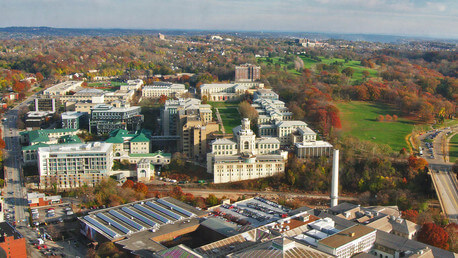
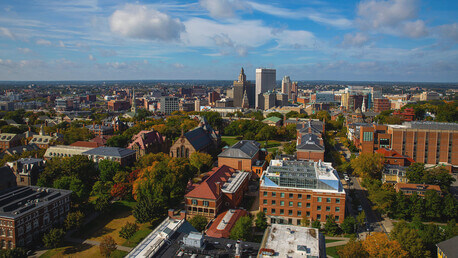
The Massachusetts Institute of Technology, more commonly referred to as MIT, is a private research university that focuses on scientific and technological research. Located on 166 acres of land in Cambridge, MA, MIT maintains five schools hosting 30 departments, as well as dozens of makerspaces, a wind tunnel, a glass lab, a research nuclear reactor, and more. Home to an array of research centers, such as the Koch Institute of Integrative Cancer Research and MIT Media Center, more than 85% of undergraduates participate in research initiatives. Students can also take advantage of MIT’s virtual experiential learning programs, such as collaborating with people around the world to tackle global poverty through D-Lab. MIT offers living-learning communities, gender-inclusive housing, Greek life, and more on campus, which features more than 3,500 works of contemporary art.

Acceptance Rate:
4%
Average Net Price:
$19,998
Campus Setting:
Small city
Average GPA
4.0
Average ACT Composite
36
Average SAT Composite
1547

Tuition, Cost & Aid

Affordability & Cost

Average Net Price
$19,998
Calculate your net cost
Tuition
In-State Tuition In-state tuition is the tuition charged by institutions to those students who meet the state's or institution's residency requirements. In-district tuition is the tuition charged by the institution to those students residing in the locality in which they attend school and may be a lower rate than in-state tuition if offered by the institution.
$60,156
Out-of-State Tuition Out-of-state tuition is the tuition charged by institutions to those students who do not meet the state’s or institution’s residency requirements. Out-of-district tuition is the tuition charged by the institution to those students not residing in the locality in which they attend school.
$60,156
Additional Costs
Room and Board The weighted average for room and board and other expenses is generated as follows:
  • (amount for on-campus room, board and other expenses * # of students living on-campus.
  • + amount for off-campus (with family) room, board and other expenses * # of students living off-campus with family
  • + amount for off-campus (not with family) room, board and other expenses * # of students living off-campus not with family)
divided by the total # of students. Students whose living arrangements are unknown are excluded from the calculation. For some institutions the # of students by living arrangement will be known, but dollar amounts will not be known. In this case the # of students with no corresponding dollar amount will be excluded from the denominator.
$19,390
Books and Supplies
$880
Average Net Price By Family Income
Income
Average Amount
< $30k
$7,432
$30k - $48k
$4,727
$48k - $75k
$8,347
$75k - $110k
$19,156
$110k+
$40,162
Financial Aid: visit page
Financial Aid Email: [email protected]

Aid & Grants

0
100
100%
Need Met
Students Receiving Gift Aid Percent of undergraduate students awarded federal gift aid. Federal gift aid includes any grant or scholarship aid awarded, from the federal government, a state or local government, the institution, and other sources known by the institution.
18%
Average Aid Per Year
$45,591
Students Receiving Grants Percent of undergraduate students awarded grant aid. Grant aid includes any grant or scholarship aid awarded, from the federal government, a state or local government, the institution, and other sources known by the institution.
18%
Average Federal Grant Aid Per Year
$3,714
Average Institution Grant Aid Per Year
$54,315


Students receiving state aid
2%
Average State Grant Aid Per Year
$2547
Students receiving federal aid
63%
Average Federal Grant Aid Per Year
$3,714
Average Grant & Scholarship By Family Income
Income
Average Amount
< $30k
$71,673
$30k - $48k
$79,271
$48k - $75k
$75,102
$75k - $110k
$63,985
$110k+
$32,294
Total Needs Based Scholarships/Grants Total amount of grant or scholarship aid awarded to all undergraduates from the federal government, state/local government, the institution, and other sources known to the institution.
$164,335,104
Total Non-Need-Based Scholarships/Grants
$5,515,685

Student Loans

Students Borrowing Loans Loans to students - Any monies that must be repaid to the lending institution for which the student is the designated borrower. Includes all Title IV subsidized and unsubsidized loans and all institutionally- and privately-sponsored loans. Does not include PLUS and other loans made directly to parents.
7%
Average Loan Amount Per Year
$13,792
Average Debt at Graduation The median federal debt of undergraduate borrowers who graduated. This figure includes only federal loans; it excludes private student loans and Parent PLUS loans.
$10,728
Median Monthly Loan Payment The median monthly loan payment for student borrowers who completed, if it were repaid over 10 years at a 5.05% interest rate.
$119
Students receiving federal loans
6%
Average Federal Loans Per Year
$5,284
Average Other Loans Per Year
$42,837


Admissions

Key Admissions Stats

Institution Type
Private
  • Not for Profit
  • Coed

Need Blind

This school does not consider an applicant’s financial situation when deciding admission

Level of Institution
4 Year
Campus Setting
Small city
0
100
4%
Acceptance Rate
33767
Students Applied
4%
Transfer Acceptance Rate
21
Transfer Students Admitted

Admissions Requirements

SAT
SAT is checked
Yes
ACT
ACT is checked
Yes
Transcript
Transcript is checked
Yes
Test Optional
Item is checked
Yes
SAT Subject Tests
Item is checked
Yes
AP Course Credit
Item is checked
Yes
Dual Enrollment
Item is not checked
No

Important Deadlines

Application TypeApplication DeadlineReply Deadline
Early Action Acceptance is not binding, but student will receive admissions decision earlier.November 1
Fall Regular DecisionJanuary 1May 1
Application Fee
$75
Fee waivers available
Applications Accepted
Online Application
Online Application

Admitted Student Stats

In-State Students
7%
Out-Of-State Students
92%
32%
Submitting ACT
78%
Submitting SAT
Average ACT Composite: 36
0
36
Average SAT Composite: 1547
0
1600
SAT Percentiles

Math
25th
790
75th
800
Reading
25th
740
75th
780
4.0
Average GPA
Students Enrolled By Class Rank

Top 10%
97
Top 25%
100
Top 50%
100

Admissions Resources

Admissions: visit page
Admissions Email: [email protected]
Admissions Telephone: 617-253-3400
For International Student Services: visit page
For Students with Disabilities: visit page
For Veteran Services: visit page

Academics

Key Academic Stats

Highest Degree Offered
Doctorate
Total Number of Students
11,858
Total Number of Undergrads
4,657
0
100
87%
Graduate in 4 Years US National: 28%
0
100
96%
Graduate in 6 Years US National: 52%
Student:Faculty Ratio
3:1
US National: 21:1
Academic Calendar

Four-one-four plan

Non Traditional Learning
  • Online Classes
  • Summer Sessions
  • Combined Institution Double Degree Programs
Learning Options
  • ROTC Army
  • ROTC Air Force
  • Study Abroad
  • Teacher Certification Offered
Classroom Sizes

2-19 Students
71%
20-39 Students
14%
40-99 Students
10%
100+ Students
3%
 

Degrees and Majors

MAJORS
53

Faculty Overview

0
100
88%
Faculty With Terminal Degree US National: 36%
Gender
Male
Female
Ethnicity

African American
Asian/Pacific Islander
White
Hispanic
Multi-Racial
Unknown

Campus Life

Key Campus Stats

Student Gender
Male
Female
52%
48%
Residency
In-State Students
7%
Out-Of-State Students
92%
Size of Town
Small city
US States Represented
54
Countries Represented
107
Ethnicity
African American
8%
Asian/Pacific Islander
34%
Hispanic
15%
White
22%
Multiracial
7%
Unknown
3%
Percent of First Generation Students
26%
Student Organizations
450
LGBTQIA Student Resource Groups
Item is checked
Yes
On Campus Women's Center
Item is not checked
No
Cultural Student Resource Groups
Item is checked
Yes

Housing

0
100
92%
Undergrads Living on Campus
On-campus living required of freshman
Yes
Disability Housing Available
Yes
0
100
93%
Freshman Living on Campus

Athletics

Divisional Sports Nickname
Engineers
School Colors
cardinal red and silver gray
Varsity Athletics Association
NCAA
Varsity Athletics Conference Primary
New England Women's & Men's Athletic Conference
Total Male Athletes
369
Total Female Athletes
293
Intramural Sports
1
Sports Club
22
Sports Team (Men)
  • Baseball
  • Basketball
  • Crew-Rowing
  • Fencing
  • Football
  • Golf
  • Ice Hockey
  • Rifle
  • Soccer
  • Swimming
  • Tennis
  • Track and Field
  • Volleyball
  • Water Polo
  • Squash
  • Sailing
Sports Team (Women)
  • Basketball
  • Crew-Rowing
  • Field Hockey
  • Lacrosse
  • Rifle
  • Soccer
  • Swimming
  • Tennis
  • Track and Field
  • Volleyball
Massachusetts Institute of Technology Athletics: visit page

Campus Safety

24-HR security patrol
24-HR security patrol is checked
Yes
Campus emergency phones
Campus emergency phones is checked
Yes
24-HR escort safety rides
Item is checked
Yes
Mobile campus emergency alert
Item is checked
Yes

After Graduation

Post Grad Stats

Average Salary
6 years after graduation
$153,600
Top 5 Cities
Boston
San Francisco
New York
Washington
Los Angeles
Top 5 Employers
MIT
Google
Apple
Microsoft
IBM
Top 5 Sectors
Business Development
Engineering
Education
Research
Information Technology
Average Debt at Graduation The median federal debt of undergraduate borrowers who graduated. This figure includes only federal loans; it excludes private student loans and Parent PLUS loans.
$10,728
Loan Default Rate
1%
National: 8%
Median Monthly Loan Payment The median monthly loan payment for student borrowers who completed, if it were repaid over 10 years at a 5.05% interest rate.
$119
MIT is the #1 Engineering school in the nation and perhaps the world. However, even those studying other subjects have come to a University that pushes the limits of time management and, quite plainly, one's genius. This University requires its students pass Calculus I and II, Physics I and II, Biology, and Chemistry to graduate, which says a lot about the emphasis on learning.
Aaron from Farmington Hills, MI
Not only is there an extensive amount of material covered, but you also have professors who are the top of their fields, right from the beginning of freshman year!
Hannah from CT
Freshman year nearly everybody takes a version of the same classes: physics, chemistry, biology and calculus. Most of these classes are good, but you may have learned some of the material before in high school. I found this especially true of physics. There are multiple levels, however, of each class, and this allows students to choose one appropriate to their skills.

I found my HASS (humanities) classes to be great. They are generally small (<20 students) and very interactive. I have learned a lot so far at MIT. I would even say that more of what I have learned has come from outside of the classroom. Homework and social activities offer an opportunity to learn how to stay organized. Extracurriculars have given me a chance to learn how to be a leader, and work with other people.
Rebecca from Louisville, CO
mit is all about constructive chaos. the institute provides the resources and environment you need to be creative/innovative then they just kinda yell "go". in a sense, you're on your own to pave your path and make the most of the opportunities, but there's also plenty of help if you seek it.
alicia from oh
The material taught in the lecture hall of MIT is...difficult. There's no way around it. But don't fear, you won't be alone in thinking it is. However, the professors are always available during office hours as well as the TAs so receiving help on those weekday nights doing problem sets isn't an issue. The classes here have a lot of material, sometimes it seems like too much, but as long as you do what you are expected to (doing the readings, doing the problem sets, going to lecture, etc), you will learn more in depth and in scope here than anywhere else in the world.
Peter from Cambridge, MA
An awesome place full of students and professors who are excited to learn and teach each other, who collaborate every day on projects that advance knowledge on topics ranging from aerospace technology to brain and cognitive sciences. Not only do you receive one of the best educations available, you are part of an amazingly talented and enthusiastic group of people who live and learn together as a community. There are opportunities for everything here at MIT, including athletics, study abroad, theater and arts, and numerous research and internship opportunities all over the world.
Margaret from Cambridge, MA
The students here are all brilliant, motivated, inspired people. Everywhere you go there is amazing science happening, and every individual has terrific opportunities through the UROP program and the many research connections that MIT has to gain experience and participate in the lab. The work is difficult, but the opportunities are worth it.
Jedidiah from Acton, ME
Despite preconceived notions of MIT, students here are not cut throat; rather, more like the cliché “we’re all in it together”. Although, as much as they say it’s not competitive, it really is. The attitude/atmosphere doesn’t feel competitive like everyone is at your throat, but it’s still there. Most technical classes are curved, and you ARE competing with everyone else in that class for your grade.
MIT requires all its graduates to have a significant breadth across math, science, and humanities; however, any undergraduate degree will leave you inches deep and miles wide in terms of specialization Most freshman attending MIT already have a sense of direction, and now that the masters is the ‘new bachelors’, specialization is even more important. That being said, yes, an MIT education is very demanding and you will learn a lot, but everyone nowadays will agree that a bachelor’s degree in Electrical Engineering hardly makes you an engineer, let alone a master’s. Regardless, MIT has an excellent program in Course 6 (EE) called M.Eng, which allows MIT undergrads to enroll in a special one year masters program in engineering. In lieu of academics, a primary source of motivation to get good grades as an undergrad is that acceptance into this program is dependent only your undergrad performance; in particular, an A/B average will almost guarantee acceptance. After one year at MIT, my focus narrowed greatly as I now know my interest and exactly what role MIT will play in my specialization, just as it will for you.
Michael from Waynesville, OH
I have truly found paradise or I hate this fracking place. Both are true all the time. This is the most stressful, most fun, and most challenging experience I have ever had, and I love it.
Samantha from Sylmar, CA
The pace is really fast, but everyone works hard and with each other on problem sets so everything is definitely manageable. This is a difficult school but you are always learning and constantly improving both yourself and your academics.
Christopher from Elmhurst, IL