Are Colleges Still Test-Optional in 2026?

A lot of students are asking the same thing right now: Do I still need to take the SAT or ACT for college?
The answer is: maybe.
Many colleges are still test-optional, which means you can choose whether to submit SAT or ACT scores. FairTest reports that more than 90% of ranked four-year colleges and universities will not require ACT or SAT scores for fall 2026 admission. But that doesn’t mean testing no longer matters. Some colleges, especially highly selective schools, have started requiring test scores again. So if you’re applying in 2026 or later, don’t assume every college on your list is test-optional.
The best move is simple: check the testing policy for each college before you apply.
The TL;DR
- Many colleges are still test-optional in 2026, but not all of them. More than 90% of ranked four-year colleges do not require SAT or ACT scores for fall 2026 admission, according to FairTest.
- Some colleges and public university systems have brought back testing requirements, so students should not assume every school is test-optional.
- Test policies now vary by school: some are test-required, some are test-optional, some are test-flexible, and some are test-free/test-blind.
- Public systems to watch include Florida, which requires ACT, SAT, or CLT scores for first-time-in-college applicants, and Georgia, where several major public universities require SAT or ACT scores for fall 2026 and beyond.
- The UNC System uses a conditional approach: students with a weighted GPA of 2.8 or higher may apply without scores, while students below that threshold must submit SAT or ACT scores.
- Even if your current college list is mostly test-optional, taking the SAT or ACT can help keep your options open if your list changes or if scholarships require scores.
- If a school is test-optional, decide whether to submit scores school by school. A strong score may help; a score below the school’s typical range may be worth leaving out.
- Applying test-optional does not necessarily hurt your chances, but at highly selective schools, it may be a more important component.
Is test-optional going away?
Not completely.
Test-optional admissions are still common, but the college admissions landscape is shifting. Some schools kept test-optional policies after the pandemic. Others reviewed their admissions process and decided to bring back SAT or ACT requirements.
That means students are now dealing with a mix of policies:
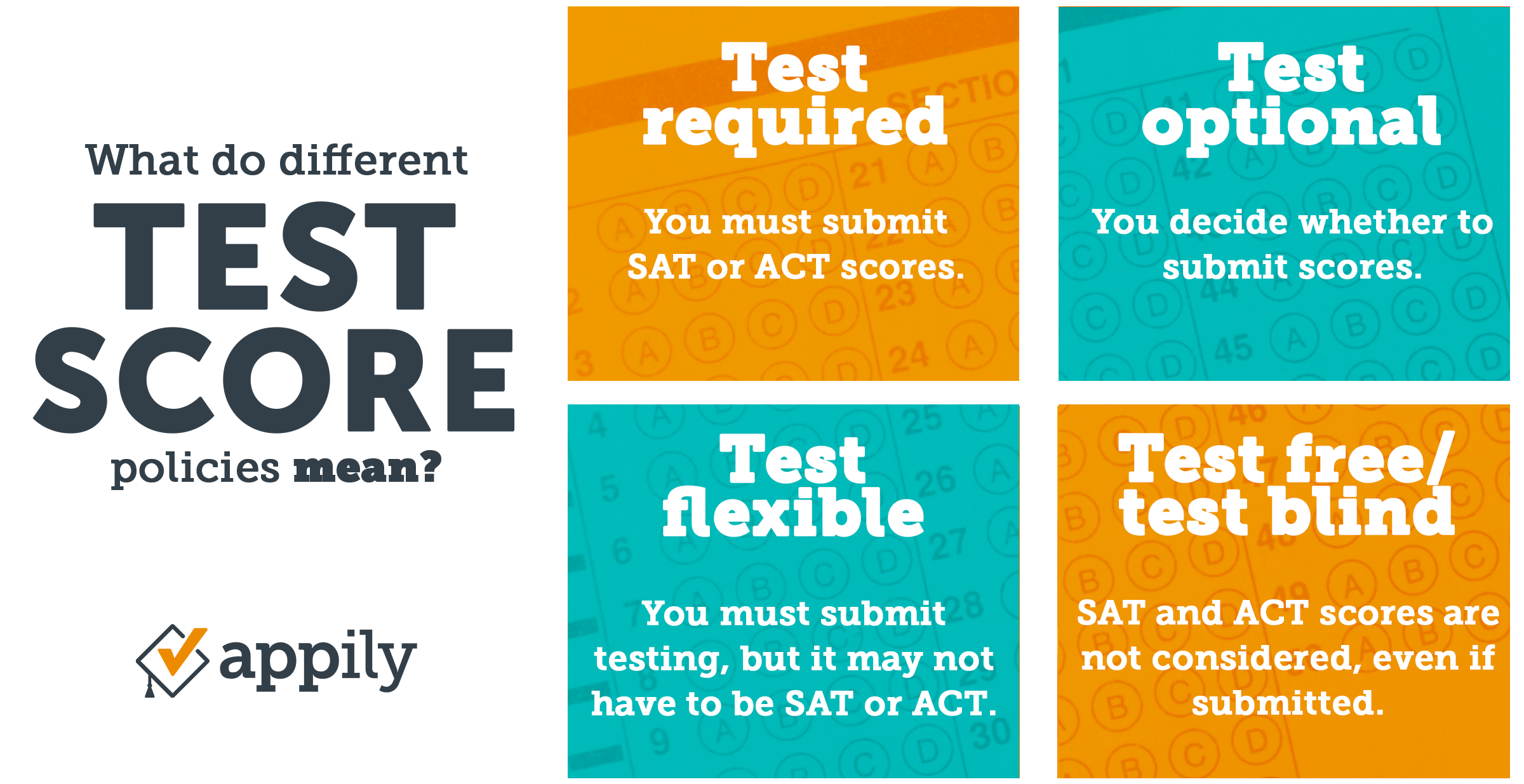
This is why students searching “are colleges still test optional?” may get confusing answers. The real answer depends on the school.
Colleges that require SAT or ACT scores again
Some schools are no longer test-optional and now require SAT or ACT scores.
Examples include:
Massachusetts Institute of Technology (MIT)
MIT recently reinstated its SAT/ACT requirement for future admissions cycles.
Dartmouth College
Brown University
Beginning with the 2024-25 admission cycle, Brown returned to requiring SAT or ACT scores.
Cornell University
As of the fall of 2026 (and beyond), Cornellnow requires SAT or ACT scores for first-year applicants.
Harvard University
While there are limited alternatives when access is an issue, Harvard now requires SAT or ACT scores as part of their application process, starting with the fall of 2025.
University of Pennsylvania
UPennformally reinstated standardized testingfor the 2025–26 admissions cycle.
Stanford University
Stanford recently announced that it would reinstate a standardized testing requirement for students entering in fall 2026.
California Institute of Technology
CalTechnow requires either SAT or ACT scores for first-year applicants.
This doesn’t mean every college is bringing testing back. It just means students need to check policies school by school.
Some public university systems are also moving away from broad test-optional policies. Notable ones include:
University of Florida system
Florida’s public universities require SAT, ACT, or CLT scores for first-time-in-college applicants.
University of Georgia system
In Georgia, several major public universities require SAT or ACT scores for Fall 2026 and beyond, while other campuses may require scores depending on GPA.
University of Tennessee system
The University of Tennessee system also requires ACT or SAT scores for first-year applicants.
Other systems, like UNC, use a conditional approach: students above a certain GPA may apply test-optional, while others must submit scores.
The takeaway: don’t assume a public university is test-optional. Check the current testing policy for each campus on your list.
Colleges that are still test-optional or test-free
Plenty of schools still do not require SAT or ACT scores.
For example, Columbia remains test-optional for applicants to Columbia College and Columbia Engineering.
The University of California system is test-free for admissions and scholarships, meaning UC does not consider SAT or ACT scores when making admissions decisions or awarding scholarships.
And some schools use a different model. Yale has a test-flexible policy, which allows first-year and transfer applicants to fulfill the testing requirement with ACT, AP, IB, or SAT scores.
That’s why terms like test-optional, test-free, and test-flexible matter. They sound similar, but they are not the same.
Do you need the SAT or ACT for college?
You may not need test scores for every school, but taking the SAT or ACT can still give you more options.
That’s especially true if:
- You’re still building your college list
- You may apply to selective schools
- You want scholarship opportunities
- You’re not sure which schools require scores
- Your test score is stronger than the rest of your academic profile
If you don’t take the SAT or ACT, you may limit your options later if you decide to apply somewhere that requires scores.
Should you submit SAT or ACT scores if a school is test-optional?
This is one of the biggest questions students ask.
If a college is test-optional, you don’t have to submit scores. But you may want to if your score helps your application.
A good rule of thumb:
- If your score is within or above the school’s middle 50% range, submitting it may help.
- If your score is below the school’s typical range, you may choose not to submit it.
- If your application is strong without scores, applying test-optional can still make sense.
The key is to decide school by school, not with one all-or-nothing answer.
What should high school students do now?
If you’re a junior or senior planning for college, here’s the simplest approach:
Make your college list first.
Don’t decide about testing in a vacuum.
Check each school’s current testing policy.
Look for words like test-required, test-optional, test-flexible, or test-free.
Pay attention to deadlines.
If a school requires scores, make sure your test date gives you enough time.
Compare your score to admitted student ranges.
This can help you decide whether to submit scores to test-optional schools.
Keep flexibility in mind.
Since testing policies keep changing, taking the SAT or ACT may help keep more doors open.
So, are colleges still test-optional in 2026?
Many are. But not all of them.
Some colleges still let you apply without SAT or ACT scores. Some don’t consider test scores at all. Others now require them again.
Instead of asking, “Are colleges test optional?” ask:
“What does each college on my list require right now?”
That one question can help you avoid surprises, plan your testing timeline, and decide whether submitting scores makes sense for you.
And remember, tests are just one piece of your application.You can use our "see my college chances" tool to see how likely it is you'd be admitted to your dream college.
FAQs on test-optional colleges in 2026
Are colleges still test-optional in 2026?
Yes, many colleges are still test-optional in 2026. However, some selective colleges have brought back SAT or ACT requirements, so students should check each school’s current policy before applying.
Is test-optional going away?
Not everywhere. Test-optional admissions are still common, but some colleges have returned to test-required policies. The trend is mixed, which is why it’s important to check your specific college list.
Do I need the SAT for college?
You may not need the SAT for every college, but some schools require SAT or ACT scores again. Taking the SAT or ACT can keep more options open, especially if your college list changes.
What colleges require SAT or ACT again?
Schools including MIT, Dartmouth, Brown, Cornell, Harvard, Penn, Stanford, and Caltech have reinstated SAT or ACT requirements for current or upcoming admissions cycles.
What does test-optional mean?
Test-optional means you can decide whether to submit SAT or ACT scores. If you don’t submit scores, your application should still be reviewed.
What does test-blind or test-free mean?
Test-blind or test-free means the college does not use SAT or ACT scores in admissions decisions, even if you submit them.
Should I submit my SAT score to a test-optional college?
Submit your score if it strengthens your application. A good starting point is to compare your score to the school’s middle 50% range for admitted students.
Should I take the SAT if my schools are test-optional?
In many cases, yes. Taking the SAT or ACT gives you flexibility if your college list changes or if you apply for schools or scholarships that require scores.
Does applying test-optional hurt you?
Not automatically. If a college is truly test-optional, your application should still be reviewed without SAT or ACT scores.
That said, applying test-optional means the rest of your application matters more, especially your grades, course rigor, essays, activities, and recommendations. If those parts of your application are strong, applying without scores can still be a solid choice.
