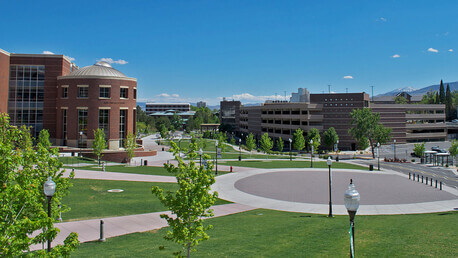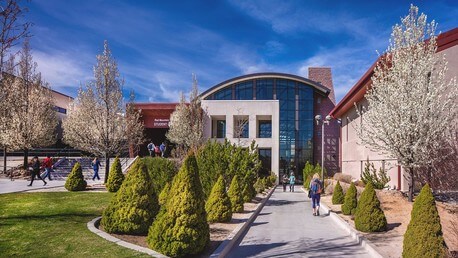
Stock image of College Campus wall
Western Nevada College

Western Nevada College

Carson City, NV, USA
Public
4 Year

Overview

Western Nevada College is a 2-year community college with a main campus in the state capital of Carson City as well as four satellite campuses. In addition to associate degrees and certificates in over 25 areas of study, the college offers a bachelor’s degree in Construction Management. WNC also provides assistance and counseling for its Latinx student population to overcome cultural barriers in their educational careers through its Latino Cohort program. Beyond the classroom, the college’s main campus provides easy access to the Sierra Nevada Mountains and Lake Tahoe.

Average Net Price:
$10,819
Campus Setting:
Small city

Tuition, Cost & Aid

Affordability & Cost

Average Net Price
$10,819
Calculate your net cost
Tuition
In-State Tuition In-state tuition is the tuition charged by institutions to those students who meet the state's or institution's residency requirements. In-district tuition is the tuition charged by the institution to those students residing in the locality in which they attend school and may be a lower rate than in-state tuition if offered by the institution.
$3,920
Out-of-State Tuition Out-of-state tuition is the tuition charged by institutions to those students who do not meet the state’s or institution’s residency requirements. Out-of-district tuition is the tuition charged by the institution to those students not residing in the locality in which they attend school.
$12,019
Additional Costs
Books and Supplies
$840
Average Net Price By Family Income
Income
Average Amount
< $30k
$13,006
$30k - $48k
$12,937
$48k - $75k
$14,555
$75k - $110k
$15,545
$110k+
$12,952
Financial Aid: visit page

Aid & Grants

0
100
55%
Need Met
Students Receiving Gift Aid Percent of undergraduate students awarded federal gift aid. Federal gift aid includes any grant or scholarship aid awarded, from the federal government, a state or local government, the institution, and other sources known by the institution.
21%
Average Aid Per Year
$6,579
Students Receiving Grants Percent of undergraduate students awarded grant aid. Grant aid includes any grant or scholarship aid awarded, from the federal government, a state or local government, the institution, and other sources known by the institution.
21%
Average Federal Grant Aid Per Year
$5,785
Average Institution Grant Aid Per Year
$1,477


Students receiving state aid
62%
Average State Grant Aid Per Year
$2320
Students receiving federal aid
68%
Average Federal Grant Aid Per Year
$5,785
Total Needs Based Scholarships/Grants Total amount of grant or scholarship aid awarded to all undergraduates from the federal government, state/local government, the institution, and other sources known to the institution.
$2,570,634
Total Non-Need-Based Scholarships/Grants
$954,737

Student Loans

Students Borrowing Loans Loans to students - Any monies that must be repaid to the lending institution for which the student is the designated borrower. Includes all Title IV subsidized and unsubsidized loans and all institutionally- and privately-sponsored loans. Does not include PLUS and other loans made directly to parents.
1%
Average Loan Amount Per Year
$4,289
Average Debt at Graduation The median federal debt of undergraduate borrowers who graduated. This figure includes only federal loans; it excludes private student loans and Parent PLUS loans.
$8,000
Median Monthly Loan Payment The median monthly loan payment for student borrowers who completed, if it were repaid over 10 years at a 5.05% interest rate.
$123
Students receiving federal loans
1%
Average Federal Loans Per Year
$4,289
Average Other Loans Per Year
$15,000


Admissions

Key Admissions Stats

Institution Type
Public
  • Not for Profit
  • Coed

Need Aware

This school may consider an applicant’s financial situation when deciding admission

Level of Institution
4 Year
Campus Setting
Small city
171
Transfer Students Admitted

Admissions Requirements

Transcript
Transcript is not checked
No
Test Optional
Item is not checked
No
SAT Subject Tests
Item is not checked
No
AP Course Credit
Item is checked
Yes
Dual Enrollment
Item is checked
Yes

Important Deadlines

Rolling Admissions

The college has rolling admissions, which means applications are accepted any time throughout the year.

Application Fee
$15
Applications Accepted

Admitted Student Stats

In-State Students
98%
Out-Of-State Students
4%
Students Enrolled By Household Income

< $30k
64
$30k - $48k
41
$48k - $75k
28
$75k - $110k
4
$110k+
1

Admissions Resources

Admissions: visit page
For Students with Disabilities: visit page
For Veteran Services: visit page

Academics

Key Academic Stats

Highest Degree Offered
Bachelor's
Total Number of Students
3,582
Total Number of Undergrads
3,582
Student:Faculty Ratio
17:1
US National: 21:1
Academic Calendar

Semester

Non Traditional Learning
  • Online Classes
  • Online Undergrad Degrees
  • Summer Sessions
Learning Options
  • Honors Program
 

Degrees and Majors

MAJORS
26

Faculty Overview

Gender
Male
Female
Ethnicity

African American
Asian/Pacific Islander
White
Hispanic
Native American
Multi-Racial

Campus Life

Key Campus Stats

Student Gender
Male
Female
46%
54%
Residency
In-State Students
98%
Out-Of-State Students
4%
Size of Town
Small city
US States Represented
10
Countries Represented
20
Ethnicity
African American
2%
Asian/Pacific Islander
3%
Hispanic
26%
Native American
2%
White
55%
Multiracial
5%
Unknown
6%
Percent of First Generation Students
54%
Student Organizations
14
LGBTQIA Student Resource Groups
Item is not checked
No
On Campus Women's Center
Item is not checked
No
Cultural Student Resource Groups
Item is not checked
No

Housing

On-campus living required of freshman
No
Disability Housing Available
No

Athletics

Varsity Athletics Conference Primary
Not applicable

Campus Safety

24-HR security patrol
24-HR security patrol is not checked
No
Campus emergency phones
Campus emergency phones is checked
Yes
24-HR escort safety rides
Item is checked
Yes
Mobile campus emergency alert
Item is not checked
No

After Graduation

Post Grad Stats

Average Salary
6 years after graduation
$35,800
Average Debt at Graduation The median federal debt of undergraduate borrowers who graduated. This figure includes only federal loans; it excludes private student loans and Parent PLUS loans.
$8,000
Loan Default Rate
18%
National: 8%
Median Monthly Loan Payment The median monthly loan payment for student borrowers who completed, if it were repaid over 10 years at a 5.05% interest rate.
$123
A community college is a great way to get the feel of how a university is like. The teachers at this school are very hands on and very knowlegable in their fields. I have learned a lot from being at this school. It has also helped me get the feel of what college professors expect. It has also given me the opportunity to achieve my goals.
Jessica from Dayton, NV
I like Western Nevada College, for reasons that there is a great teacher to student ratio, it is a low cost school, and it prepares me for my pursuit in higher education. I like that I am able to get an education there and that I am helped on how to do so. There is much opportunity for growth among traditional and non-traditional students.
Gary from CARSON CITY, NV
great school for graphic arts. small classes population one on one interaction really nice. price is right, about eighty dollars a unit, sweet.
Therese from Minden, NV
All but one of my professors was excellent. Of course that one professor was teaching the one class I really needed to excel in so I had to stay in her class. After a 6 week absence we were so behind we had to skip a chunk of the materials and the administrators were not helpful at all. Of course this is a one time thing because the rest of my professors were excellent.
Jessica from Carson City, NV