Student Mental Health & the College Search

So you’ve gotten those acceptance letters, your financial aid packages are squared away, and it’s time to choose the college that you’ll call home for the next four years.
There may be a lot of anxious thoughts running through your head as you make that big decision…“What do I do if I get homesick?” “What happens if I feel lonely and isolated?” “What if I don’t make it?” “How do I know I can get the mental health support that I need?”
If your mind is racing with these college-decision anxieties, you’re not alone.
Over the past decade, the number of high school and college students struggling with mental health and wellness challenges has grown at an alarming rate.
That’s why it helps to ask:
Will this be a place where I can handle those challenges, not just academically, but in real life?
Whether you're a high school student beginning your college search or a transfer student looking to make a change, this article will help you find the right school that prioritizes your mental health and well-being.
TL;DR: Choosing the right college for your mental wellbeing
- It’s normal to feel anxious during this process. You don’t have to have everything figured out right now.
- Choosing a college can feel overwhelming. You’re balancing academics, cost, and expectations, while also living in a brand new environment, away from home, with a brand new and probably unfamiliar community. Just know you’re not alone.
- Your mental health matters just as much as your academic fit when picking a school. Take care of yourself.
- Look beyond rankings and consider things like campus culture, support services, and whether you feel comfortable there.
- Most colleges offer mental health resources and support for students, but access and quality can vary. It’s worth looking into!
- Safe spaces, student groups, and a supportive environment can make a big difference, especially for students from different backgrounds.
Bottom line:The right college isn’t just where you’ll succeed academically. It’s where you’ll feel supported as a whole person.
How many college students struggle with mental health challenges?
College student mental health is a justifiable concern for parents, colleges, and communities alike. Let's start by sharing some data highlighting the importance of this topic. In general, college students experience higher levels of stress and pressure than their non-college-going peers.
"College students have just entered a new, complicated stage in their lives—emerging adulthood," explained Yewande Shitta-Bey, a high school student and co-founder of a mental health and wellness app called Eudai."Most students are living away from their families for the first time; establishing the path they need to take to reach their ideal future; figuring out their identity while still developing it; and are given the option of choice like never before," Yewande continued. "Simply put, it's complicated, sometimes awkward, and immensely stressful."
These stresses and other life challenges have led to a sharp increase in students struggling.
The data from a recent study shows that 60% of college students either self-identified or met the criteria for having a mental health challenge, representing an increase of over 50% in just the last seven years.
These numbers come from The Healthy Minds Study, a critical piece of research colleges use to identify student needs, evaluate support programs, and plan for additional student mental health support services and programs.
Additional college student mental health statistics shared in the study include:
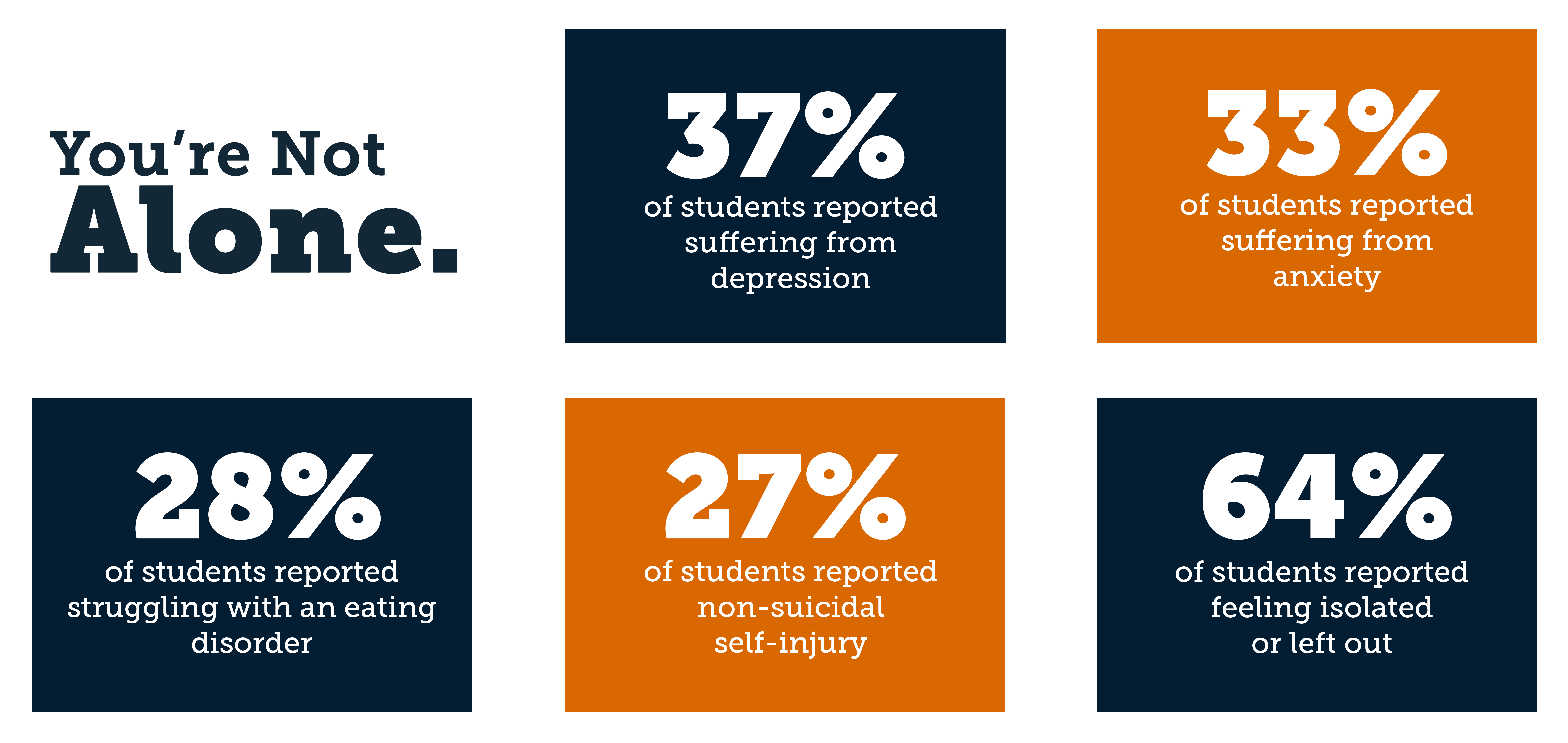
You can read the complete study (linked above) for detailed information on specific mental health diagnoses, student use of campus services, and much more.
College programs to support student mental health
It's easy to think that wellness and mental health programs are something separate from academics. But the reality is that they go hand in hand in facilitating student success.
Why is mental health important for college students? If a student is struggling or feels unsafe, it's far less likely that they'll realize academic success. Colleges and universities know this and are working to support students with innovative and comprehensive programs.
Whether it's shifting the narrative about mental health so more students feel comfortable accessing it or dedicating more resources to rapid access and support, higher education institutions are stepping up to support their college students' mental health.
What to look for in campus mental health support
Most colleges offer mental health services, but the experience can vary. As you research schools, here are a few areas to pay attention to:
Counseling services
Many campuses have counseling centers where students can talk to licensed professionals.
It’s helpful to look into:
- How easy it is to schedule an appointment
- Whether sessions are short-term or ongoing
- If there are additional off-campus referrals
The goal isn’t to find a perfect system—just one that feels accessible.
Campus environment and culture
Mental health isn’t only about formal services. It’s also about how a campus feels day to day.
Ask yourself:
- Does this environment feel supportive?
- Can I picture myself here?
- Do students seem balanced, or constantly overwhelmed?
Sometimes your first impression can tell you a lot.
Safe spaces and student support systems
For many students—especially those from marginalized backgrounds—feeling safe and supported on campus matters just as much as academics.
Look for:
- Cultural centers
- LGBTQ+ resource centers
- Identity-based student organizations
These spaces can play a big role in helping you feel like you belong.
Wellness resources beyond counseling
Mental health support can show up in different ways.
Some schools offer:
- Wellness programs
- Stress management resources
- Fitness and recreation opportunities
These aren’t extras—they’re part of how students manage stress and stay balanced.
Case Study: What a mentally healthy university looks like
One University that has been recognized for its dedication to student mental health is Arizona State University. This school was named to the Princeton Review's 2026 Mental Health Services Honor Roll for its innovative programs and practices, including their:
Peer-to-Peer Resources: The headlining peer-to-peer resource at Arizona State, Devils 4 Devils, offers open discussions that help students build coping strategies and connect with a supportive community. Student ambassadors lead outreach through tabling and trainings, while committee members host Community Circles where students share experiences and receive peer support.
Students also produce the Inside ASU podcast, which helps them transition from relying on their parents to managing their own health.
Wellness as a Part of Quality of Life: Wellness at ASU centers on four pillars: physical health, mental health, educational development, and community engagement. In addition to counseling, students can access resources for health, fitness, and domestic violence prevention, along with videos and articles on topics like body image, grief, stress, and depression. Credit-bearing courses in stress and critical incident management are also available, as are apps like Headspace and Calm for meditation, relaxation, and sleep.
The campus hosts mental health–focused events throughout the year, including the Out of the Darkness walk in partnership with the American Foundation for Suicide Prevention.
- 24/7 Mental Health Services: ASU has made clear that same day availability is a commitment to its students; offering 24/7 availability of counselors and clinicians. The campus clinical staff includes psychologists, counselors, social workers, marriage and family therapists, and substance abuse professionals, with counselors trained in suicide prevention, alcohol abuse prevention, domestic abuse prevention, and grief counseling.
- Depending on the need, students have two different 24/7 responders:
- Open Call and Open Chat, which provides text, call, video, or in-person options with counselors dedicated to ASU.
- EMPACT Crisis Line, which, while intended for crisis support, has “highly qualified, helpful professionals” on call for general “guidance on how to handle a concern.”
The takeaway is that plenty of colleges prioritize student wellness, and you should feel comfortable screening the schools on your list for similar initiatives to those put in place by Arizona State.
Next, we discuss what to look for when screening schools and how to judge a college as mentally healthy and supportive.
Looking for mental health & wellness support on campus
As we've discussed, the transition to a new academic and social environment, the pressure to succeed academically, and the experience of living away from home can all contribute to stress and mental health challenges.
Choosing a school that prioritizes college students' mental health and wellness allows you to access resources and support should you ever need them, even if you don't need them today.
So, how can you tell if a college strives to prioritize student mental health? Here are a few things to look for.
Are there mental health services on campus?
College campuses typically offer a variety of mental health resources for students. These resources can include counseling, therapy services, support groups, and educational programs.
One common resource is a counseling center, where you can receive individual or group therapy. Licensed mental health professionals, like therapists and counselors, support students with various mental health concerns, including anxiety, depression, and stress. All care is confidential and intended to be accessible when you need it.
Another resource you'll typically find on campus is a student health center, which may also offer mental health services. These centers are more like a clinic or doctor's office in that they might be staffed with psychiatrists or nurses who can provide medication management or other types of treatment.
Are there opportunities for building and maintaining social connections?
Studies show that people who feel supported and connected have better health outcomes than their less socially connected peers. Look for colleges and universities that recognize this connection and find ways to help students build and maintain social networks.
"Most colleges and universities have mental health and mentorship-related programs and services. But, what will really set apart one program/service from another is an emphasis on community," Yewande Shitta-Bey, the mental wellness app creator, explained.
"An underlying issue with being an emerging adult is that young people often feel like they have to figure things out on their own. Therefore, being actively supported in a positive space is necessary to maintain good mental health."
For students coming from diverse backgrounds, cultural groups provide a warm embrace of familiar traditions and shared experiences. Imagine celebrating Lunar New Year with fellow Asian students, or debating political issues with a Mexican American student association. These communities nurture identity, combat isolation, and offer a safe space to navigate the complexities of navigating a new landscape.
Similarly, LGBTQIA+ groups become beacons of acceptance and understanding. Through movie nights, drag queen bingo, or heartfelt discussions, these organizations offer a crucial sense of belonging for students often marginalized by society. They foster confidence, provide support in navigating coming-out journeys, and challenge heteronormative narratives prevalent on campus and beyond.
Are there safe spaces on campus - especially for marginalized groups?
Marginalized groups are particularly vulnerable to mental health challenges. A recent survey conducted by GLSEN revealed that more than 90% of students report hearing homophobic phrases or slurs in their schools. Nearly 60% of those students said they had heard those comments directly from teachers or administrators. This is unacceptable, and learning institutions are working to protect against this unsafe and unwelcome behavior.
Having safe spaces on campus, especially for marginalized groups, is critical because it provides a supportive and inclusive environment where students can express themselves freely and feel a sense of belonging.
Safe spaces can provide students with physical and emotional safety, allowing them to speak openly about their experiences, share their concerns, and seek support from others who share similar experiences. This can help to reduce feelings of isolation and promote a sense of community and belonging, which can, in turn, improve mental health and academic success.
Safe campus spaces also convey that the institution values diversity and inclusion. This confirmation can help you decide where to go to school.
Are there peer-to-peer support networks in place?
Peer support programs are usually run by trained students who offer comfort, information, and referrals to other resources. These support providers are non-judgmental, active listeners who can be found in many different contexts, such as in dormitories, through student organizations, or in online support groups.
"Confiding in peers is much less intimidating for many students than consulting a therapist or other counselors," said Chad Jordan, a freshman at the University of Central Florida and co-founder of the mental health and wellness app, Eudai.
"Moreover, students will always have more peers around them than trained professional mental health experts and counselors, meaning that peer support grand-scale mental health support," Chad continued.
"In my mind, peer-to-peer support is simply making a new friend, and friends are always there for one another during hard times. It can be as simple as keeping in contact online every week and scheduling meeting times to chat in person or perform an activity together occasionally."
Self-help apps & online support groups
Self-help tools like apps and online support groups can also be great resources to supplement on-campus programs. As Chad mentioned, many students report using these tools when they feel uncomfortable seeking help in person or need additional support between therapy sessions.
While the college might not supply these resources, you can request a list at your school's counseling center or within your peer-to-peer support network. And the good news is that more and more resources like these are being created each day.
Convenient therapy options
Traditional therapy, while effective, can sometimes feel inaccessible due to scheduling conflicts, transportation hurdles, or simply the nerves of attending an in-person session. Mobile therapy platforms can alleviate these barriers, offering convenient, confidential support from licensed therapists, anytime, anywhere.
One such provider, Joon, integrates the benefits of one-on-one therapy sessions with a mobile app-based experience and support and resources for parents and guardians. Better yet, they are experts in teen mental health and support the unique stresses high school and college students face. These types of convenient therapy options can be a great support to supplement the resources you can find on college campuses.
Ready to find colleges that will support your wellness?
Now that you know what to ask when searching for a school that prioritizes mental health in college students, it's time to get to work building out your college list and touring campuses. Appily can make this easier by helping you find colleges that match what's most important to you. From budget to majors to campus vibe - whatever your criteria - we can help you connect with the right-fit schools.
Either create a free Appily account or log into your existing account. Browse schools based on your ideal qualities, save those you're interested in, and we'll share curated suggestions for schools that match your needs.
Just click the button below to get started.
FAQs: Choosing the right school for your mental health
Why is mental health important when choosing a college?
College is a major transition. You’re adjusting to new routines, responsibilities, and environments. Choosing a school that supports your mental health can make that transition easier and help you stay balanced over time.
What mental health support do colleges offer?
Most colleges provide services like:
- Counseling centers
- Wellness programs
- Peer support groups
However, access can vary, so it’s a good idea to look into how easy it is to schedule appointments and what resources are available.
How do I know if a college will be a good fit for my mental health?
Start by asking:
- Do I feel comfortable on this campus?
- Are there support systems available if I need them?
- Can I picture myself living here day to day?
Fit isn’t just about academics — it’s also about how you feel in the environment.
Are there safe spaces for marginalized students on college campuses?
Many colleges offer safe spaces and support centers, such as:
- Cultural centers
- LGBTQ+ resource centers
- Identity-based student organizations
These can help students feel more supported and connected.
Is it normal to feel anxious about choosing a college?
Yes. A lot of students feel anxiety about college decisions. It’s a big choice, and there’s often pressure to “get it right.” Feeling unsure is part of the process.
What should I do if I feel overwhelmed during the college search?
If things start to feel like too much:
- Take a break from researching
- Talk to someone you trust
- Focus on one step at a time
You don’t have to figure everything out all at once.
Do college decisions define your future?
No. Where you go to college is one step — not your entire path. There are many ways to reach your goals, and your success isn’t tied to one decision.
