Letters of Recommendation for College Applications: How to Ask, Who to Ask, and What to Send

Seeing “letter of recommendation required” or “letter of recommendation optional” on a college application can feel intimidating, but the process is manageable once you know the steps.
A college recommendation letter is written by someone who knows you well and can describe your character, work ethic, growth, and potential. The strongest letters usually come from people who can share specific examples, not just people with impressive titles.
Start by checking each college’s requirements. Then choose the right recommender, ask early, and send them a short packet with your deadlines, college list, activities, goals, and submission instructions.
A strong college recommendation letter helps admissions teams understand who you are beyond your grades, test scores, and activities list. It gives someone else the chance to speak to your character, work ethic, growth, and potential.
Here’s what to know before you ask.
The TL;DR:
A college recommendation letter is written by someone who knows you well and can speak to your strengths, character, work ethic, and potential.
- Good recommenders include teachers, school counselors, coaches, mentors, employers, club advisors, or community leaders.
- The best recommender is not always the person with the biggest title. It’s the person who can write a specific, thoughtful letter about you.
- Ask early. A few weeks is the minimum, but a month or two is better.
- Ask in person if you can, and ask whether they feel comfortable writing you a strong letter of recommendation.
- Give your recommender everything they need: deadlines, college list, resume or activities list, intended major, and submission instructions.
- Most students waive their FERPA rights so colleges know the letter was written confidentially.
- Always send a thank-you note after the letter is submitted.
Bottom line: A strong recommendation letter starts with choosing the right person, asking respectfully, giving them enough time, and making it easy for them to write something meaningful
What is a college recommendation letter?
A college recommendation letter is a written endorsement from someone who knows you well and can speak to your abilities, character, accomplishments, and potential.
That person might be:
- A teacher
- A school counselor
- A coach
- A club advisor
- A mentor
- A manager from a job
- A religious or community leader
These letters give colleges a more complete picture of you. They can highlight things that may not be obvious from the rest of your application, like how you participate in class, how you support others, how you handle challenges, or how you’ve grown over time.
A strong letter of recommendation does more than say you’re a good student. It gives specific examples that help an admissions committee understand what you would bring to campus.
Why are letters of recommendation important?
Your college application already tells schools a lot.
It shows your grades, courses, activities, essays, and sometimes test scores. But recommendation letters add another layer.
They help admissions teams hear from someone who has seen you learn, lead, struggle, improve, contribute, or take initiative.
That perspective matters because colleges often review applicants holistically. In other words, they’re not just looking at one number or one part of your application. They’re looking at the full picture.
Recommendation letters can help show:
- How you approach learning
- How you work with others
- How you handle responsibility
- What kind of energy you bring to a classroom or community
- Why you may be a strong fit for college
They can also matter for scholarships, especially when an application asks someone to speak to your character, leadership, or potential.
Do you need a letter of recommendation for college?
It depends on the college.
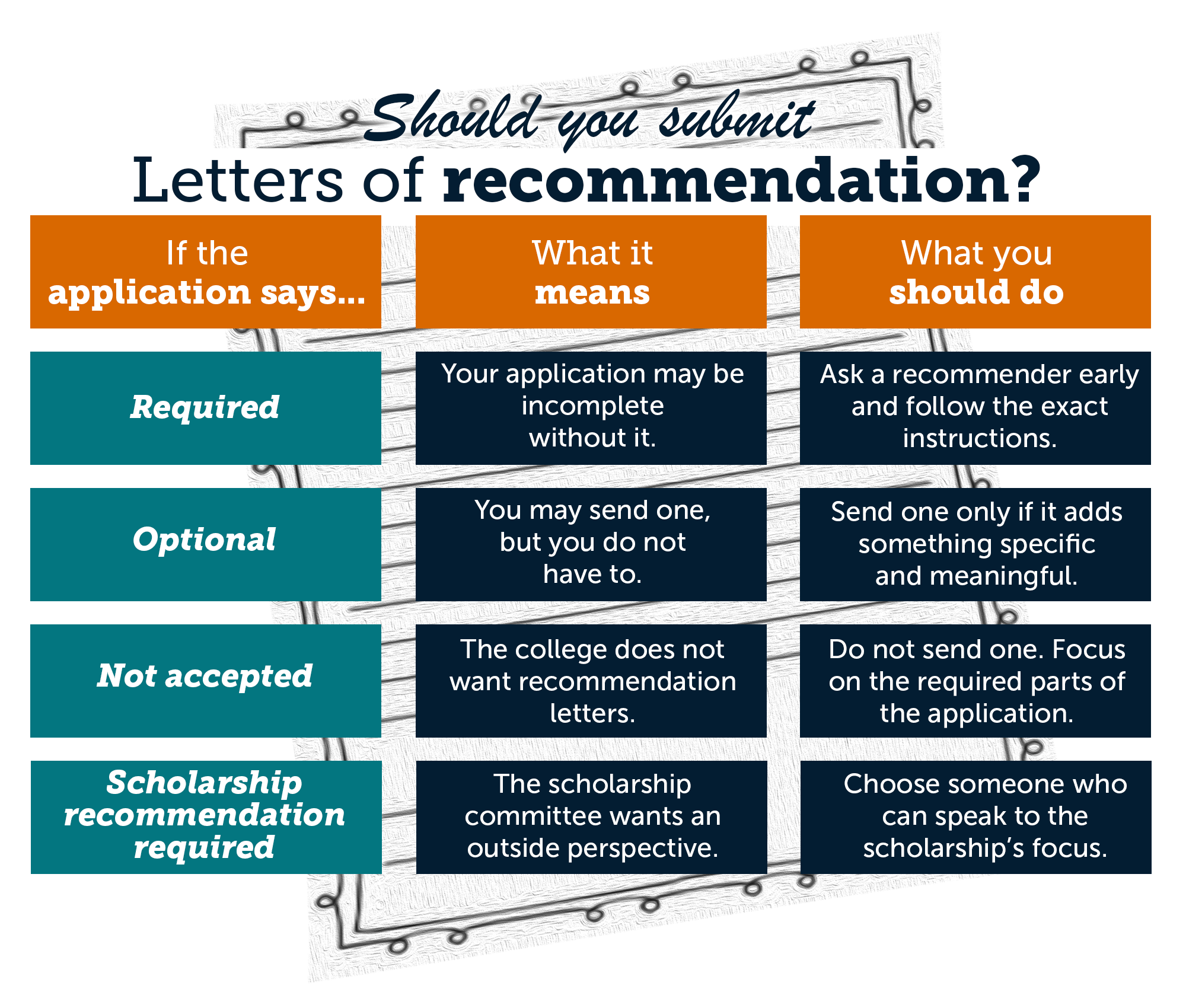
Some colleges require one or more letters of recommendation. Others make them optional. Some may not accept them at all.
Scholarship applications may also require recommendation letters.
That’s why it’s important to check the requirements for each college and scholarship on your list. Don’t assume every application asks for the same thing.
If a school requires recommendation letters, skipping them could leave your application incomplete. If they’re optional, a strong letter can still help if it adds something meaningful to your application.
How many letters of recommendation do you need?
Many colleges ask for one to three letters of recommendation, but requirements vary.
You may need:
- One counselor recommendation
- One or two teacher recommendations
- An additional letter from a coach, employer, mentor, or community leader
Before asking anyone, make a quick list of what each college requires. That way, you’ll know how many letters you need, who should write them, and when they’re due.
Who should write your college recommendation letter?
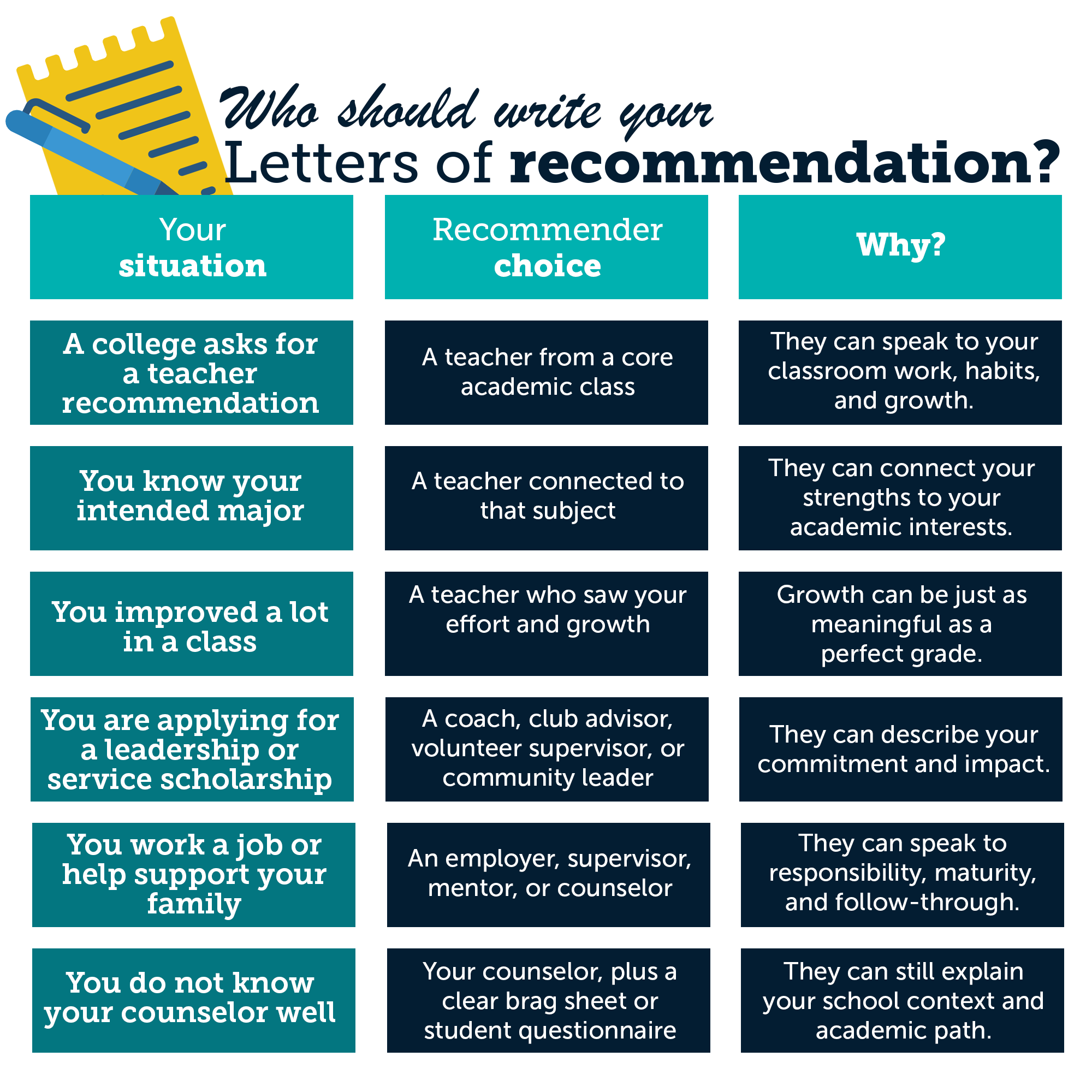
The best recommender is someone who knows you well and can speak honestly about your strengths.
A big title is less important than a real connection.
A detailed letter from a teacher who knows your work and growth will usually be stronger than a generic letter from someone who barely knows you.
Let’s break it down:
Teachers
Teachers are often the best people to ask, especially if they taught you in a core subject like English, math, science, social studies, or world language.
If you already know what you want to study, think about asking a teacher connected to that area. For example, if you’re applying to an engineering program, a math or science teacher may be a strong choice. If you’re interested in writing, communications, or humanities, an English or social studies teacher might make sense.
School counselors
A school counselor can speak to your overall academic path, course choices, growth, and school context. Some colleges specifically require counselor recommendations.
Coaches, advisors, and mentors
If you’ve been involved in an activity for a while, a coach, club advisor, or mentor may be able to speak to your leadership, commitment, teamwork, and growth outside the classroom.
Employers and community leaders
If you need another letter, you could ask someone who has supervised you at work, volunteering, church, a community organization, or a summer program.
The key is to choose someone who can say more than “this student is nice.” You want someone who can show how you think, contribute, and follow through.
Who should you avoid asking?
Avoid asking someone just because they seem impressive. A recommender should know you well enough to give specific examples.
You usually should not ask a family member unless the application specifically allows it and that person can offer a perspective the college would not get elsewhere. In most cases, a teacher, counselor, coach, employer, mentor, advisor, or community leader will be a stronger choice.
You should also avoid asking someone who barely knows you, someone who may write a vague letter, or someone you have not spoken to before sending an invitation through an application platform.
How to ask for a letter of recommendation
Asking for a recommendation letter can feel awkward.
That’s normal.
But most teachers, counselors, and mentors understand this is part of the college application process. Many are happy to help, especially if you ask respectfully and give them enough time.
Here’s how to handle it.
Build the relationship before you ask
The best letters come from people who actually know you.
That doesn’t mean you need to be the loudest student in class or the star of every activity. It means you should show up, participate, ask questions, follow through, and let the person see how you work.
If you know you’ll need recommendation letters later, start building those relationships early.
Ask in person if you can
If possible, ask face-to-face.
You might say:
“I’m starting my college applications and wanted to ask if you would feel comfortable writing me a strong letter of recommendation.”
That wording is helpful because it gives the person room to be honest. You want someone who feels confident writing a strong letter for you.
If you can’t ask in person, a phone call or thoughtful email is okay. Try not to send a recommendation request through Common App or another platform before speaking with them first.
Ask early
Give your recommender as much time as possible.
A few weeks is the minimum. A month or two is better.
Teachers and counselors may be writing letters for many students, especially during application season. Asking early shows that you respect their time and are taking the process seriously.
Share the right information
Once someone agrees to write your letter, send a follow-up email with everything they’ll need.
Include:
- Your earliest deadline
- The full application deadline
- Your legal name and preferred name
- Your pronouns, if you want to include them
- The colleges or scholarships you’re applying to
- Your intended major or academic interests
- Your resume or activities list
- A few things you hope they might highlight
- Any submission instructions
You can also include why you asked them specifically. That can help them write something more personal.
Follow up politely
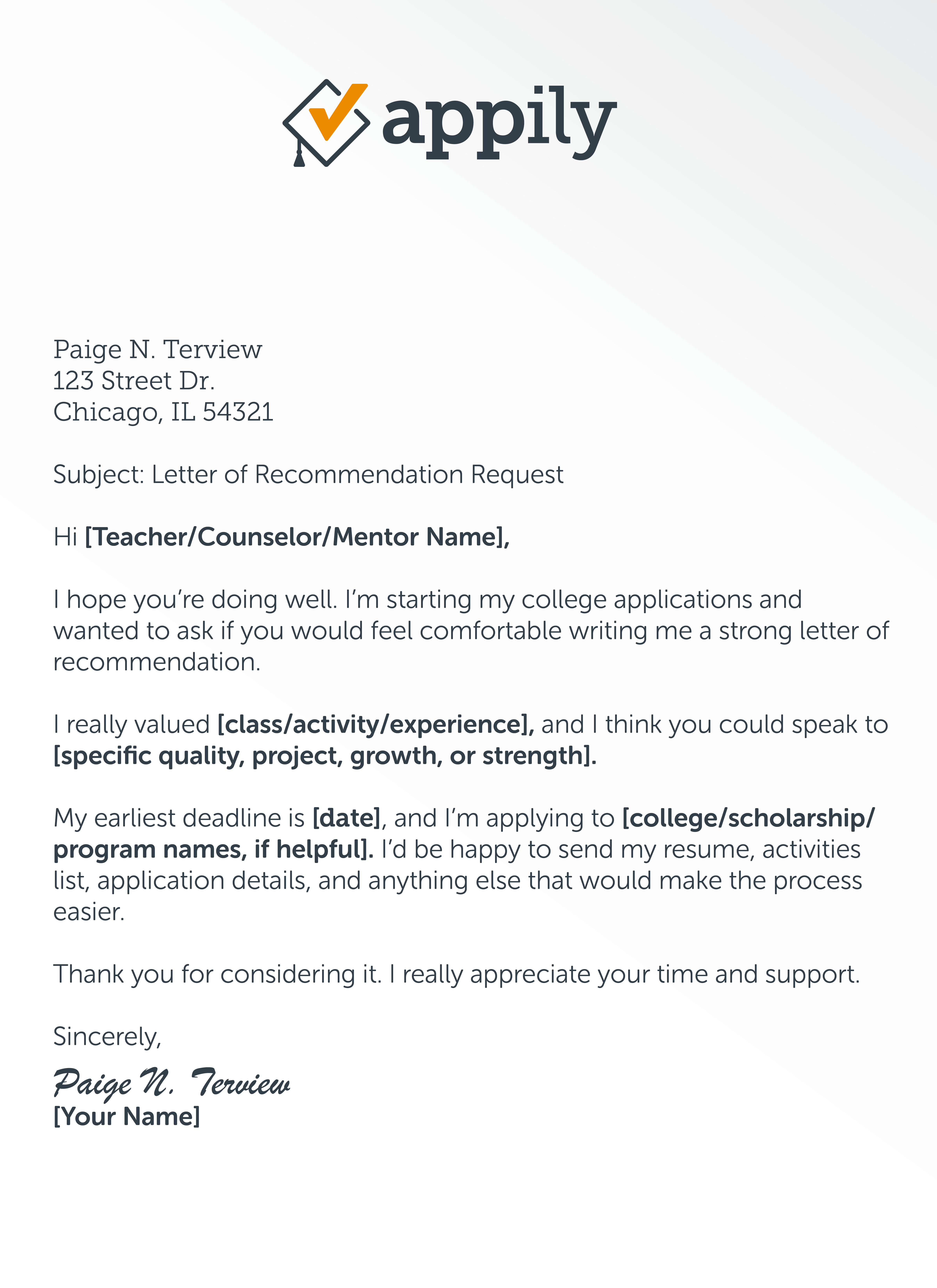
If the deadline is getting close and your letter hasn’t been submitted, it’s okay to send a friendly reminder.
Keep it simple and respectful.
Say thank you
After your recommender submits the letter, write a thank-you note.
It doesn’t have to be long. A short, sincere note goes a long way.
And when you know where you’re going to college, consider updating them. Teachers, counselors, and mentors often really do want to hear how things turn out.
What your recommender needs
Before your recommender starts writing, make the process easy for them.
A strong recommendation packet might include:
- Your resume or activities list
- Your college list
- Your intended major or career interests
- Your earliest deadline
- Any required forms or submission links
- A short explanation of why you’re applying to certain schools
- A few examples of projects, assignments, activities, or moments you’re proud of
- Stamped and addressed envelopes, if a physical letter is required
Most recommendation letters are submitted electronically now, but if a school or scholarship asks for a mailed letter, help your recommender by providing everything they need.
Can you reuse letters of recommendation?
Yes, in many cases.
One teacher’s recommendation can often be used for multiple college applications.
Application platforms like the Common App can make this easier because your recommender may be able to upload the letter once, and you can assign it to multiple schools.
That said, always check each college’s requirements. Some schools may ask for a specific kind of recommender, like a core academic teacher or counselor.
What is a FERPA waiver?
FERPA stands for the Family Educational Rights and Privacy Act.
In college applications, you’ll often see a FERPA waiver connected to recommendation letters.
Signing the waiver means that if you later request access to your college records, you won’t be able to read the recommendation letters submitted on your behalf.
Most students waive their right to view the letters. That signals to colleges that the recommendation was written honestly and without student editing.
Some recommenders may show you their letter anyway. Others may not. Either is normal.
The bigger point is this: choose recommenders you trust.
Should you sign the FERPA waiver?
In most cases, yes.
Signing the FERPA waiver tells colleges that your letters were submitted confidentially and without your involvement in shaping or editing them.
If you’re worried about what a recommender might say, that may be a sign to ask someone else.
Common App letters of recommendation
The Common App makes recommendation letters easier to manage because the process happens inside the platform.
You can invite recommenders, track whether letters have been submitted, and assign recommendations to different colleges.
Common App includes several recommendation types, including:
- Academic
- Personal
- Professional
- High school official
Just remember: ask the person first before sending a Common App invitation.
Getting a surprise request through the platform isn’t the best look — and it may not make your recommender feel especially prepared to write something thoughtful.
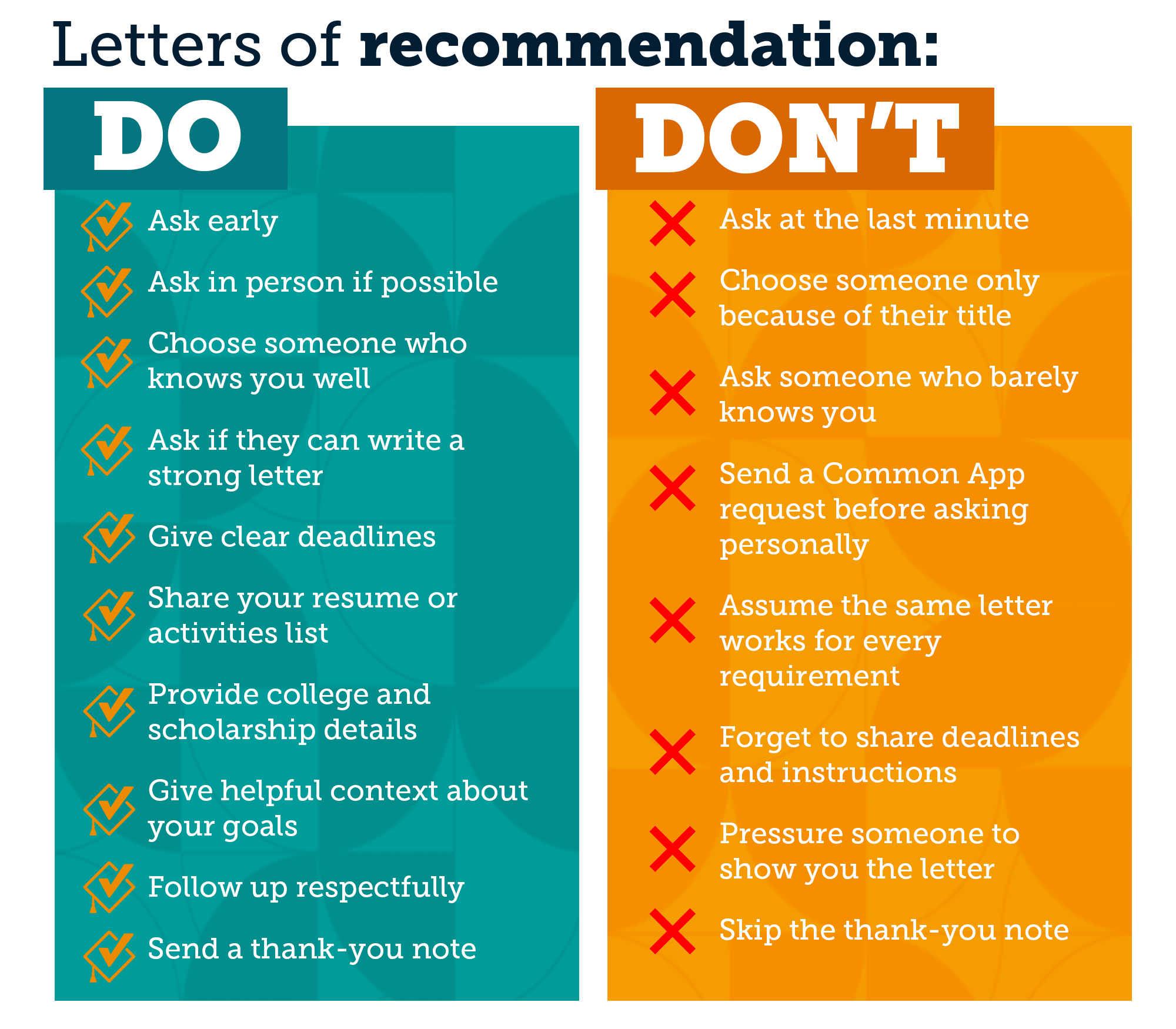
Letter of recommendation request template
Use this as a starting point, but make it sound like you.
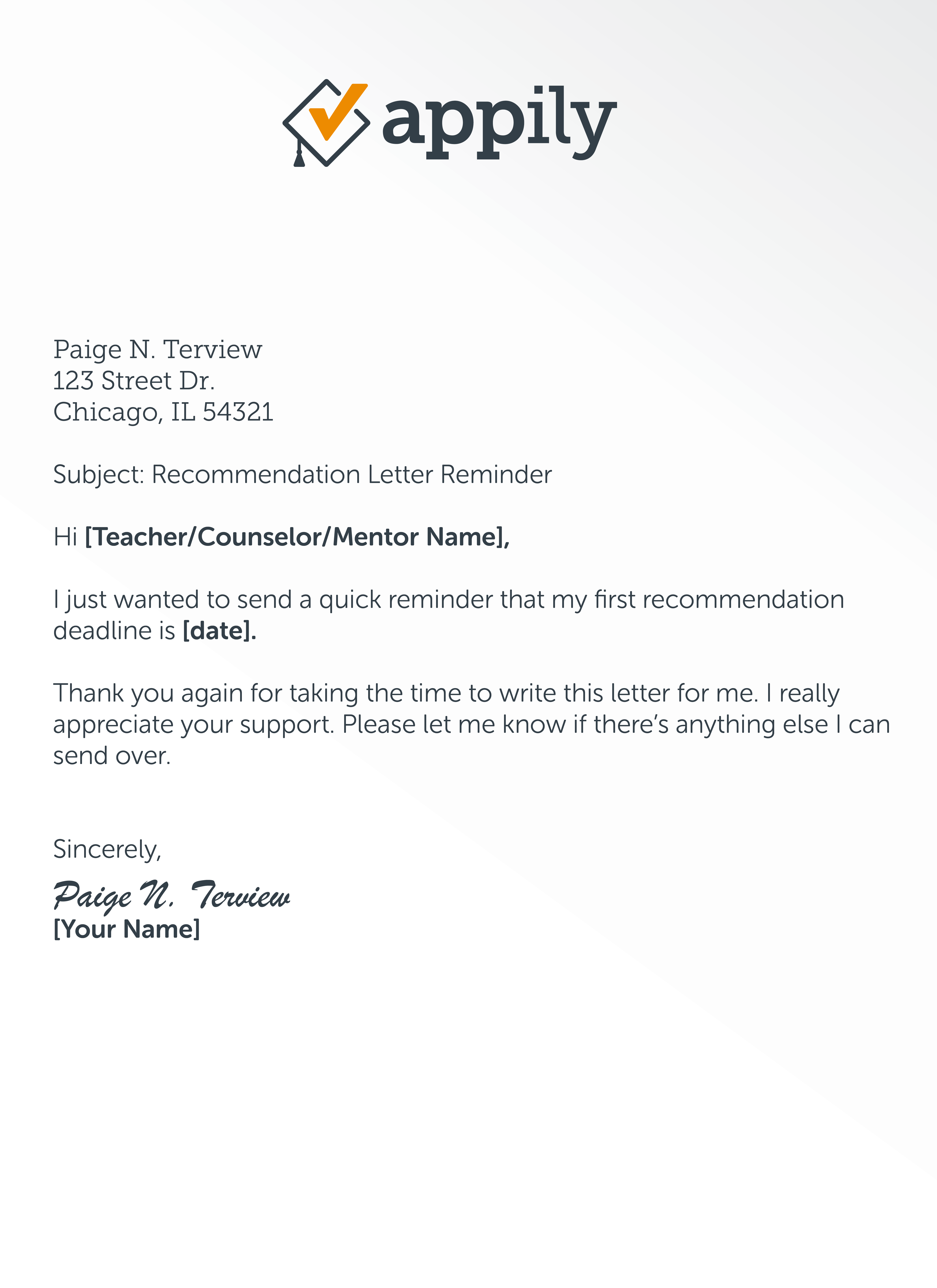
Follow-up reminder template
If the deadline is getting close, send a short reminder.
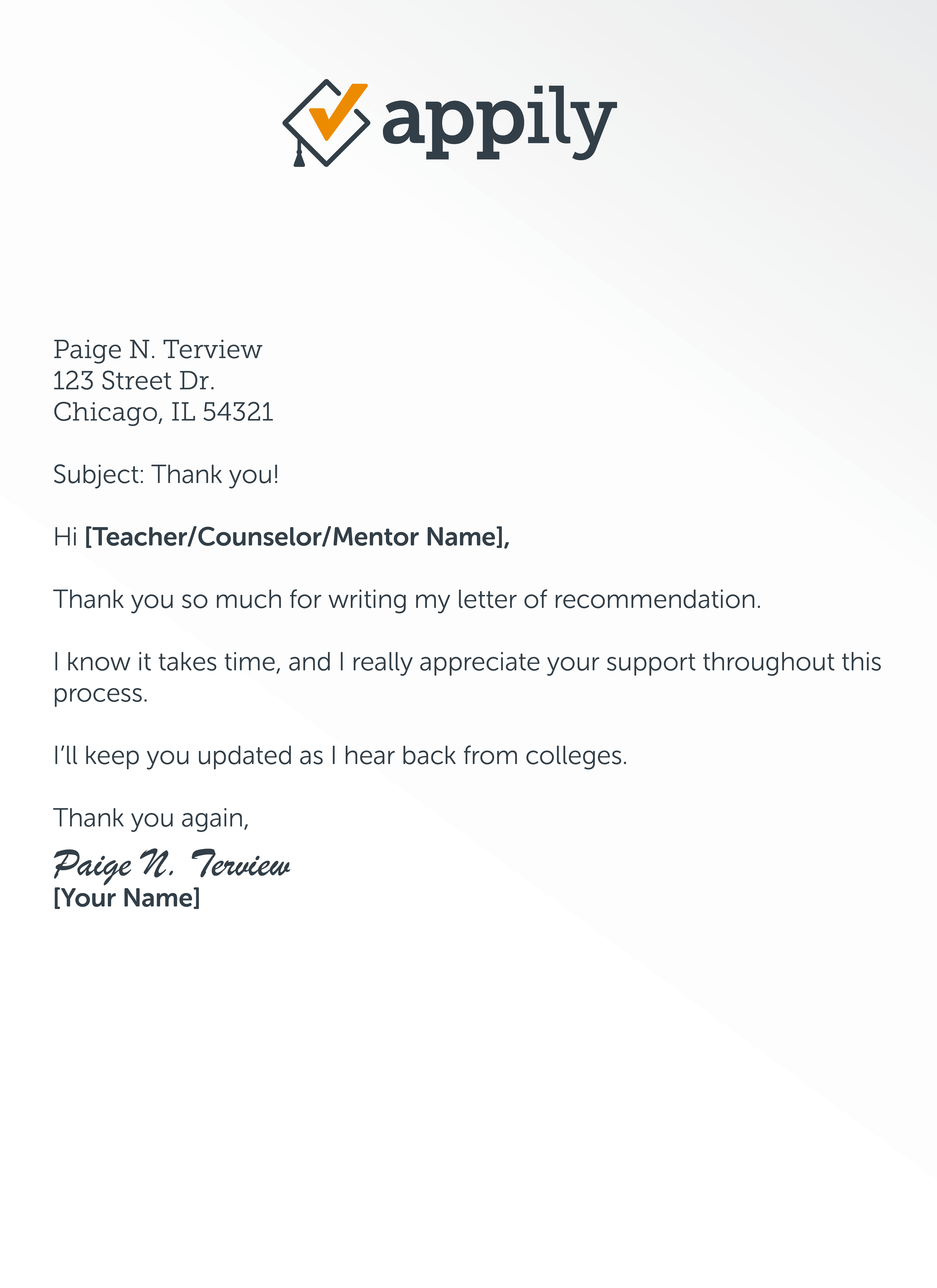
Thank-you note template
After the letter is submitted, send a thank-you note.
As you wait for your letters
Once you’ve asked and sent your materials, try not to hover.
You can track submission status in your application platform and send a polite reminder if needed, but give your recommender time to write.
While you wait, keep moving on the other parts of your applications: essays, activity lists, financial aid forms, scholarships, and your college list.
Recommendation letters are important, but they’re one piece of the process.
Final thoughts on college letters of recommendation
Letters of recommendation can feel like one more thing to manage, but they’re also a chance for colleges to understand you more fully.
A strong letter can show how you learn, lead, contribute, and grow.
The best way to get one is simple:
Choose the right person. Ask early. Be respectful. Share helpful information. Say thank you.
That’s it.
You don’t need to overthink every part of the process. You just need to handle it thoughtfully.
Be sure you have the right colleges on your list
As you work through applications, recommendation letters, essays, and deadlines, it helps to know your college list is working for you.
With Appily, you can explore detailed profiles of colleges, compare costs, take virtual tours, and find schools that fit your goals, interests, and budget.
You don’t have to leave your college choices to chance.
Start building a list that feels right for you.
FAQs: College Letters of Recommendation
What is a college letter of recommendation?
A college letter of recommendation is a written endorsement from someone who knows you well. It helps colleges understand your character, work ethic, academic strengths, growth, and potential beyond the rest of your application.
Do colleges require letters of recommendation?
Some colleges require recommendation letters, some make them optional, and others do not accept them. Always check each college’s application requirements before asking for letters.
How many letters of recommendation do I need for college?
Many colleges ask for one to three letters, but it depends on the school. You may need a counselor recommendation, one or two teacher recommendations, or an additional letter from a coach, employer, mentor, or community leader.
Who should I ask for a college recommendation letter?
Ask someone who knows you well and can speak specifically about your strengths. A teacher, counselor, coach, mentor, employer, or club advisor can all be good options.
The best recommender is someone who can share real examples of how you learn, lead, contribute, or grow.
Is it better to ask a teacher or counselor?
It depends on what the college requires. Teachers are usually best for speaking to your academic work and classroom presence. Counselors can speak to your overall academic path, course choices, growth, and school context.
Some colleges specifically ask for both.
When should I ask for a letter of recommendation?
Ask as early as possible. A few weeks is the minimum, but giving your recommender a month or two is better — especially during college application season.
How do I ask for a recommendation letter?
Ask politely and directly. If possible, ask in person.
You can say:
“I’m starting my college applications and wanted to ask if you would feel comfortable writing me a strong letter of recommendation.”
This gives the person room to be honest and helps make sure they feel confident writing for you.
What should I give my recommender?
Send your recommender everything they need to write a strong letter, including:
- Your earliest deadline
- Your college list
- Your intended major or academic interests
- Your resume or activities list
- Any submission instructions
- A few things you hope they might highlight
The easier you make it for them, the stronger and more specific the letter can be.
Can I reuse a recommendation letter for multiple colleges?
Yes, in many cases. Platforms like the Common App often allow recommenders to upload one letter that can be sent to multiple schools. Just make sure each college accepts that type of recommendation.
What is the FERPA waiver?
The FERPA waiver asks whether you waive your right to view recommendation letters later. Most students choose to waive this right because it signals to colleges that the letter was written confidentially.
If you are worried about what someone might write, it may be better to ask a different recommender.
Should I send a reminder about my recommendation letter?
Yes, if the deadline is getting close and the letter has not been submitted. Keep it polite and brief. Thank them again and offer to send any additional information they need.
Should I write a thank-you note?
Yes. A short thank-you note is always a good idea. Your recommender took time to support your application, and a sincere thank-you goes a long way.
