Understanding the ROI of a College Degree

With rising tuition costs and growing student loan debt, many of you and your families are asking an important question:
Is college worth it?
The answer depends on your goals, field of study, and financial planning. But, for most graduates, a college degree still delivers strong long-term value.
Most people think about the ROI on a college degree in financial terms, like how much a degree costs versus how much it pays off in salary later. And there’s truth to that. A degree from top engineering schools like MIT or Caltech, or from highly ranked public and private universities such as Princeton or UVA, can result in a 20-year net ROI of nearly 20%.
Contributing factors to this value include the amount of financial aid available, the time it takes students to graduate (at these schools, 90% or more students finish in four years), and the kinds of salaries graduates earn.
In this guide, we’ll break down:
- The ROI (return on investment) of a college degree
- Whether college is worth the cost
- The benefits of going to college
- Degrees with the best ROI
- Master’s degrees with the highest return
What is the ROI of a college degree?
ROI, or return on investment, measures how much financial benefit you gain compared to what you spend.
For college, that includes:
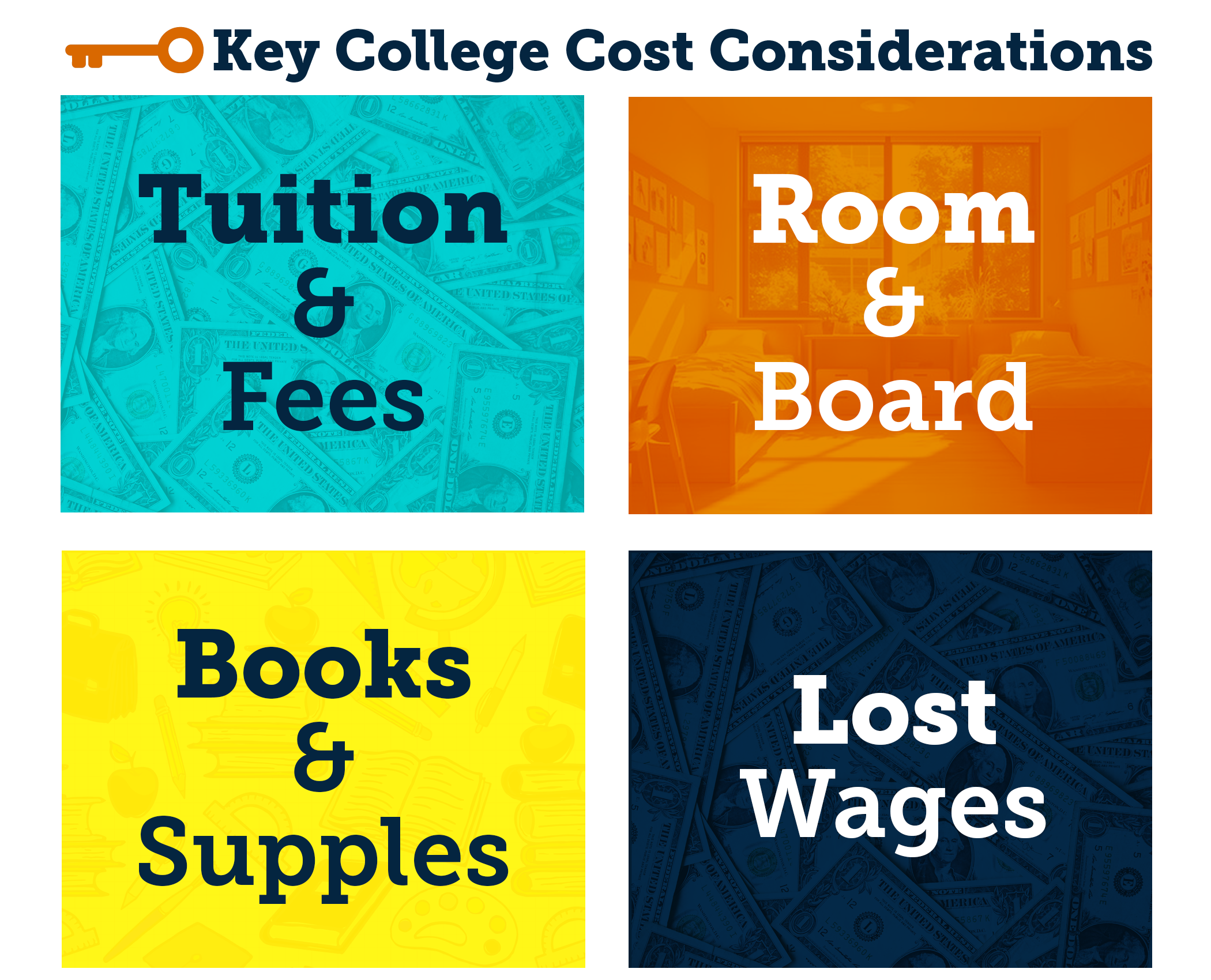
And compares them to:
- Higher lifetime earnings
- Career advancement opportunities
- Employment stability
The Earnings Gap: College vs. High School
According to U.S. Bureau of Labor Statistics data:
- Workers with a bachelor’s degree earn significantly more per week on average than those with only a high school diploma.
- Bachelor’s degree holders also experience lower unemployment rates.
Over a lifetime, this earnings gap can add up to hundreds of thousands, sometimes even millions, of dollars.
For many students, that difference makes college absolutely worth the investment.
Is college worth the cost?
College is expensive. There’s no denying that.
But when evaluating whether college is worth it, you should consider:
Long-Term Earnings Potential
Bachelor’s degree holders typically earn more over their careers than those without a degree.
Job Stability
Higher levels of education are linked to lower unemployment rates.
Career Mobility
Many high-paying or leadership roles require a bachelor’s degree or higher.
Non-Financial Benefits
The benefits of going to college extend beyond salary:
- Networking opportunities
- Skill development
- Professional connections
- Personal growth
- Increased career flexibility
For many graduates, the long-term financial and professional benefits outweigh the upfront cost, especially when choosing a major strategically.
Degrees with the best ROI
Not all degrees produce the same return.
Fields tied to strong labor market demand often provide the highest ROI.
Bachelor’s Degrees With Strong ROI
Degrees in these areas often deliver higher lifetime earnings relative to cost:
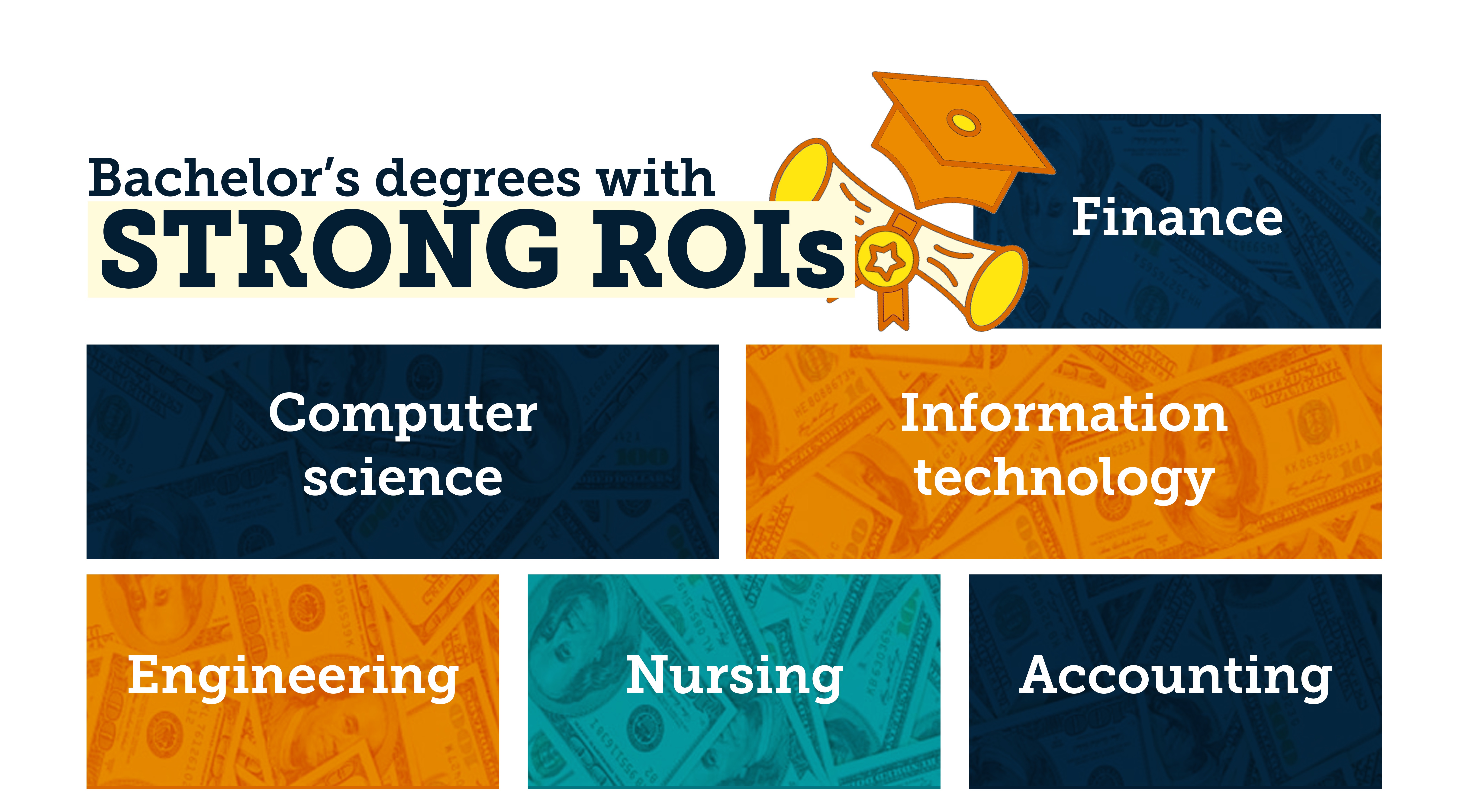
These majors typically lead to:
- Above-average starting salaries
- Strong job growth
- Clear career pathways
When asking “Is college worth it?” your major choice plays a major role in the answer.
When college may not deliver a strong ROI
College isn’t automatically worth it in every situation.
ROI may be lower if:
- You take on high debt for a low-paying field
- You don’t complete your degree
- You attend a high-cost institution without financial aid
- Your career path does not require a degree
Alternatives such as trade school, certifications, or apprenticeships may offer a strong ROI in certain industries.
The key is alignment between education cost and career outcome.
The benefits of going to college (beyond salary)
While ROI is often measured financially, college offers broader advantages:
Expanded Career Options
Many careers require a degree as a minimum qualification.
Professional Networks
College provides access to professors, alumni networks, internships, and career services.
Skill Development
Critical thinking, communication, and analytical skills are valuable across industries.
Higher Job Satisfaction
Research often shows that individuals with higher education levels report greater career satisfaction and stability.
For many students, these intangible benefits make college worthwhile even beyond earnings.
Is a college degree worth it in 2026?
For most students, yes, if approached strategically.
College tends to be worth the cost when:
- You choose a major with solid earning potential
- You manage debt responsibly
- You graduate on time
- You use internships and networking opportunities
The biggest driver of ROI isn’t just attending college: it’s completing your degree and entering a strong field.
TL;DR: Is college worth it?
- The ROI of a college degree is positive for most graduates.
- Bachelor’s degree holders earn more and face lower unemployment rates.
- Degrees in STEM, healthcare, and business often offer the best ROI.
- College is worth the cost when aligned with career goals and managed financially.
How do you find the right path?
Start with academic fit, social fit, and financial fit. But don’t stop there. Look at what drives your student. What do they find interesting? What kind of life do they want to build? And which careers align with those answers?
Skills and interests may change over time. Values, on the other hand, tend to stay consistent. So they’re often the clearest guide to long-term success and satisfaction.
Sometimes, that path will include a four-year college. Other times, it may lead to a trade program, an apprenticeship, military service, or a more flexible route. All of these can offer meaningful returns when matched with the right goals.
What matters most is knowing where you want to go and finding the best way to get there.
Start exploring today. Use our free tools to find the college or post-high school path that fits your goals and values!
FAQs about the ROI of a college degree
Is college worth it financially?
For many graduates, yes. Lifetime earnings and lower unemployment rates typically offset the upfront cost, especially in high-demand fields.
What degrees have the best ROI?
Engineering, computer science, nursing, and finance are consistently strong performers in terms of salary relative to cost.
Is college worth the debt?
It can be, but debt should be manageable relative to expected income. A common rule of thumb is to borrow less than your anticipated first-year salary.
What are the biggest benefits of going to college?
Higher earnings potential, career flexibility, networking, professional development, and lower unemployment risk.
