Public vs. Private Colleges: How to Choose the Right Fit

Choosing between public and private colleges is less about which type is “better” and more about which school gives you the best combination of affordability, academic fit, support, and campus experience.
Public colleges often cost less for in-state students, while private colleges may offer enough grants or scholarships to narrow the price difference. Compare actual schools by net price, major strength, admission likelihood, student support, and campus fit before deciding.
The TL;DR:
- Public colleges are supported in part by state or local governments and often charge lower tuition for in-state students.
- Private colleges generally have higher published tuition, but some offer enough grants and scholarships to make their net price competitive with public colleges.
- Do not compare schools by sticker price alone. Use each college’s net price calculator to estimate what you may actually pay.
- Public colleges are not always large, and private colleges are not always small. Compare the actual class sizes, programs, student support, and campus experience at each school.
- The better choice depends on your net price, academic fit, admission likelihood, student support, campus environment, and outcomes.
- If both public and private colleges fit your goals, keep both on your list until you can compare financial aid offers and actual costs.
What’s the difference between public and private colleges?
The main difference is how they are funded and governed. Public colleges are operated under public control and generally receive support from state or local governments. Private colleges are privately controlled and rely more heavily on tuition, donations, endowment income, and other private revenue.
The National Center for Education Statistics classifies colleges by control as public, private nonprofit, or private for-profit.
Those differences can influence tuition, financial aid, campus size, academic offerings, and the overall student experience, but they do not determine what every individual college will be like.
Public vs. private colleges at a glance
Factor | Public colleges | Private colleges |
Funding | Generally receive state or local government support | Rely more heavily on tuition, donations, endowments, and private sources |
Tuition | Often lower for in-state students | Usually higher published tuition |
Out-of-state cost | Often charge higher tuition to out-of-state students | Tuition usually does not depend on state residency |
Financial aid | May offer state aid, institutional aid, and federal aid | May offer substantial institutional grants or scholarships, depending on the school |
Size | Many public universities are large, but size varies | Many private colleges are smaller, but size varies |
Majors | Large public universities may offer broad program options | Program range varies; some are broad, while others are more specialized |
Class experience | Introductory classes may be larger at big universities | Smaller private colleges may have smaller classes, depending on the school |
Campus life | Large universities may offer extensive clubs, athletics, and big-campus traditions | Smaller colleges may offer a more close-knit campus environment |
May appeal to students who want… | Strong in-state options, broad academic choices, or a larger campus | Smaller-school environments, specific programs, or competitive institutional aid |
Should I choose a public or private college?
Neither is automatically the better choice.
An in-state public college may be the better option if it gives you a lower net price and offers the academic program, support, and campus experience you want. A private college may be the better option if grants or scholarships make the cost competitive and the school is a stronger match for your academic or personal goals.
Compare actual colleges using five factors:
- net price
- strength in your major or academic interests
- admission likelihood
- student support
- campus environment
A private college with strong grant aid may cost less than an out-of-state public university. An in-state public college may offer the best combination of price and academic options. The college type alone will not tell you which school is the better deal.
What is a public college?
A public college is operated under public control and typically receives support from state or local governments. That public funding is one reason in-state students often pay lower tuition than out-of-state students.
Public colleges include large state universities, regional public universities, and community colleges. Depending on the school, they may offer a wide range of majors, large student organizations, research opportunities, athletics, and other big-campus experiences.
A public college can be a strong option if the price works for your family and the school offers the academic programs, support, and campus environment you want.
What is a private college?
A private college is controlled by a private organization rather than state or local government officials. Private colleges generally rely more heavily on tuition, donations, endowment income, and other private revenue.
Most students comparing public and private colleges are looking at private nonprofit colleges, such as liberal arts colleges, religiously affiliated colleges, and private universities.
Private for-profit colleges operate differently. Before applying to one, review its accreditation, cost, graduation rates, transfer policies, and student outcomes carefully.
Private colleges can be a strong option for students who want a particular academic environment, a mission-driven campus, a smaller-school experience, or a school that offers enough institutional aid to make the cost manageable.
How much do public and private colleges cost?
Public colleges usually have lower published tuition for in-state students. Private nonprofit colleges usually have higher published tuition, but they may also offer institutional grants and scholarships that reduce the price.
For 2025–26, College Board reports these average published prices for full-time undergraduates:
College type | Average tuition and fees | Average total student budget |
Public two-year, in-district | $4,150 | $21,320 |
Public four-year, in-state | $11,950 | $30,990 |
Public four-year, out-of-state | $31,880 | $50,920 |
Private nonprofit four-year | $45,000 | $65,470 |
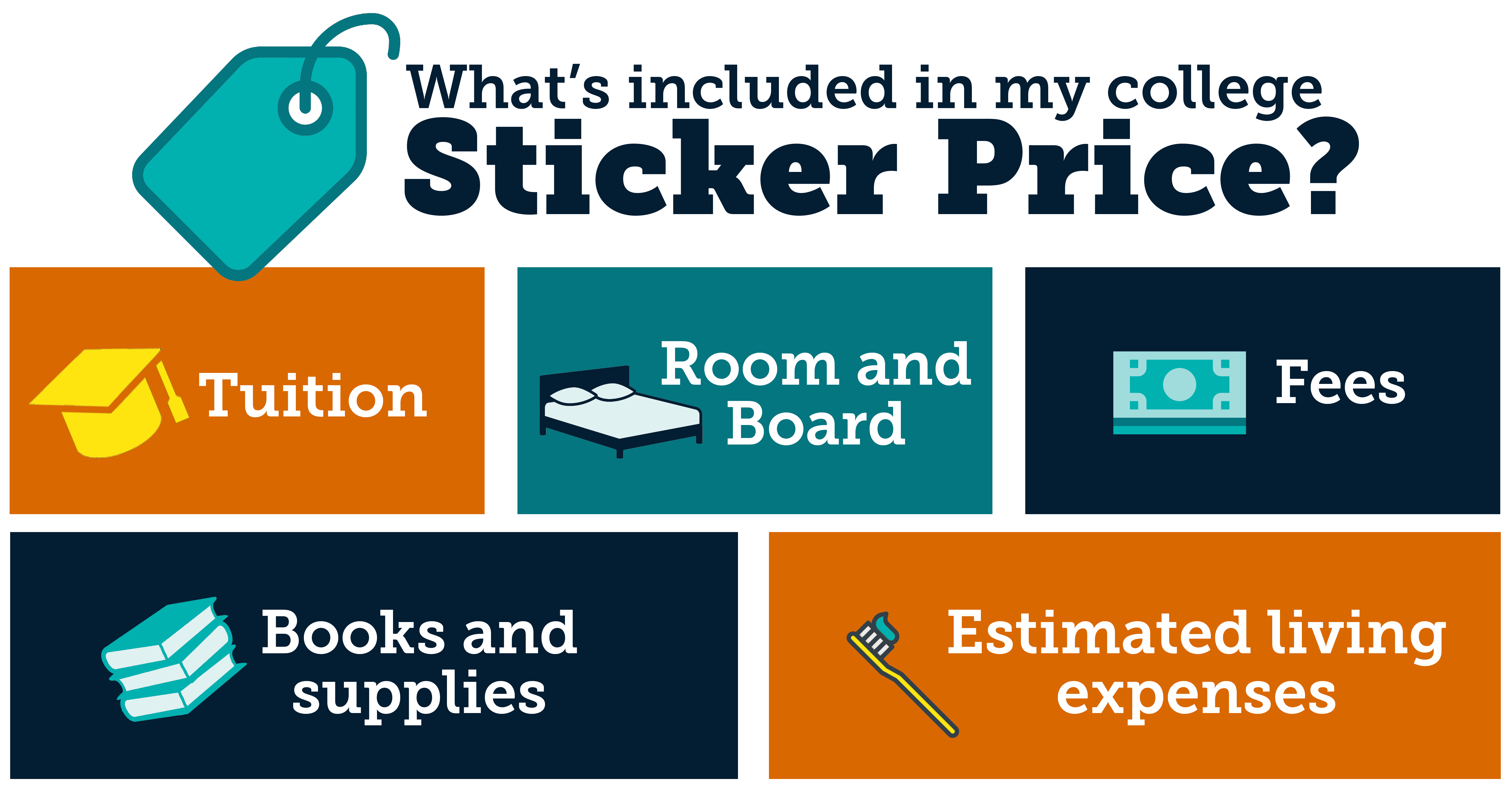
The total student budget includes tuition and fees, housing and food, books and supplies, transportation, and other estimated expenses.
These are national averages, not prices you should expect every college to charge. Your actual cost will depend on the college, your residency status, your housing plan, your financial aid offer, and whether you receive scholarships or grants.
Compare net price, not sticker price
There's a distinct difference between a college's net price and sticker price. Sticker price is the published cost before financial aid. Net price is the amount you may pay after grants and scholarships are subtracted.
That difference can change the public vs. private comparison. A public college may have a lower sticker price. A private college may offer enough grant or scholarship aid to bring the net price closer to, or sometimes below, another option.
College Board estimates that in 2025–26, first-time full-time in-state students at public four-year colleges paid an average of $2,300 in net tuition and fees after grant aid. At private nonprofit four-year colleges, the estimated average was $16,910.
Those are national averages, so they should not be used to predict what an individual college will cost you.
Use each college’s official net price calculator before you rule a school in or out. The U.S. Department of Education explains that net price calculators allow prospective students to enter information about themselves and see what students with similar circumstances paid after grants and scholarships.
You can find colleges’ official net price calculators through the U.S. Department of Education, but you know Appily's college profiles also include a college’s net price based on your income bracket? Once you’ve registered for your free account, you’ll be able to see the average net price for students like you for hundreds of colleges that you may be interested in.
A net price calculator gives you an estimate, not a final financial aid offer. Federal Student Aid requires calculators to make clear that estimates can change and are not a final determination of a student’s actual aid award.
Treat the calculator as a planning tool, then compare actual financial aid offers after admission.
Pros and cons of public colleges
Public college pros
- Lower published tuition for in-state students
- Broad major and program options at many large universities
- Large universities may have extensive alumni networks
- Big-campus activities, athletics, and student organizations at many schools
- Research opportunities at many public universities
- Transfer pathways from community colleges to public four-year colleges in some states and systems
Public college cons
- Higher tuition for out-of-state students
- Larger classes at some universities, especially in introductory courses
- Students at large universities may need to be proactive about using advising, tutoring, office hours, and other support services
- Popular majors or course sections may have enrollment limits at some schools
- Institutional grants and scholarships vary widely by college
A public college can be a great fit if the cost works, the academic program is strong, and the school gives you the support and campus experience you want.
Pros and cons of private colleges
Private college pros
- Smaller classes at many smaller private colleges
- Smaller schools may make it easier to build frequent relationships with professors and advisors
- Strong institutional grants or scholarships at some colleges
- Mission-driven communities, including religious or liberal arts campuses
- Tuition generally does not change based on state residency
- Specific academic or campus cultures that may fit your goals
Private college cons
- Higher published tuition on average
- Fewer majors at some small private colleges
- Smaller campuses may have fewer clubs, facilities, or course sections
- May have less of that big-campus energy if you want major athletics or a large Greek life scene
- Financial fit can depend heavily on the aid offer
A private college can be worth considering if the net price works and the school fits the way you want to learn.
Choose a public college if…
A public college may be the better fit if:
- You qualify for in-state tuition.
- You want a larger campus with many student organizations.
- A public university has a strong program in your intended major.
- You want to stay closer to home.
- You plan to start at community college and have identified a clear transfer pathway to a public four-year college.
- Your net price is lower than your private college options.
Do not assume a public college will automatically be less expensive. Run the net price calculator for every school you are seriously considering.
Choose a private college if…
A private college may be the better fit if:
- You want a smaller-school environment.
- The college offers a strong program in your intended major.
- The financial aid offer makes the net price manageable.
- You want a specific campus environment, such as a liberal arts, faith-based, or mission-driven college.
- You are comparing out-of-state public options with private colleges that have similar net prices.
- You prefer the academic, advising, or community experience at a particular private college.
Do not assume every private college has small classes or generous financial aid. Compare the actual numbers and student experience at each school.
Student scenarios: public vs. private college choices
If you are budget-conscious
Start with in-state public colleges, community college transfer pathways, and private colleges that offer grants or merit scholarships. Then compare net price, not tuition alone.
For each school, check:
- the official net price calculator
- grants and scholarships you may qualify for
- housing and food costs
- transportation costs
- whether scholarships renew each year
- conditions you must meet to keep institutional scholarships
Use Appily’s scholarship search to look for scholarships based on grade level, background, interests, and academic goals.
If you are a first-gen student
Look closely at advising, first-year support, tutoring, career services, and financial aid guidance. A lower price is important, but so is knowing where to turn when you need help.
Ask each college:
- Is there a first-generation student program?
- What support is available specifically for first-generation students?
- Who would I contact if I need help understanding financial aid, registration, or academic requirements?
- How often can students meet with an advisor?
- What tutoring or academic coaching is available?
- How does the financial aid office explain aid offers and renewal requirements?
A school does not need a program labeled “first-generation” to offer strong support. Focus on what help is actually available and how easy it is to access.
If you are undecided about your major
A larger public university may offer more majors, minors, and course options. A smaller college may offer more individualized advising as you explore.
Compare both types by looking at:
- number and variety of majors
- advising model
- how easy it is to change majors
- exploratory or undecided student programs
- whether changing majors can affect your graduation timeline
- internship and career support
Appily’s "Best Colleges by Major" pages can help once you start narrowing your academic direction.
If you want smaller classes
Don't assume every private school will feel personal or every public school will feel huge.
Instead, compare:
- average class size
- class size in first-year courses
- student-to-faculty ratio
- advising access
- availability of faculty office hours
- undergraduate research or mentorship opportunities
These school-level details will tell you more about your likely classroom experience than the public or private label alone.
If you are comparing in-state and out-of-state options
Start with the numbers. In 2025–26, College Board reported average published tuition and fees of $11,950 for public four-year in-state students and $31,880 for public four-year out-of-state students. That difference can put an out-of-state public university closer to a private college’s net price after aid.
Before choosing the out-of-state option, ask:
- Does the college offer out-of-state merit scholarships?
- What residency rules determine whether I qualify for in-state tuition?
- Is there a regional tuition exchange or reciprocity program that applies to me?
- Is the academic program strong enough to justify the additional cost?
- How does the net price compare after grants and scholarships?
Don't assume you can move to another state for college and automatically qualify for in-state tuition later. Residency requirements vary by state and institution. Check the official residency or tuition-classification rules for the college before making your cost estimate.
How to compare public and private colleges
Use the same checklist for every school on your list.
1. Compare cost
Look at tuition, fees, housing, food, books, transportation, and personal expenses. Then subtract grants and scholarships to estimate net price.
Start with each school’s official net price calculator. Once you receive financial aid offers, compare the actual grants, scholarships, work-study, and loans listed in each one.
Use Appily’s compare college costs tool to keep your numbers organized as offers come in.
2. Compare academic fit
Check whether the college offers your major, related majors, strong advising, internship access, and support if you change direction.
If a specific major matters to you, look beyond whether the school simply offers it. Compare course options, internship opportunities, undergraduate research, accreditation when relevant, and any requirements for entering or staying in the program.
3. Compare admission likelihood
A college can be public, private, affordable, and still not be the right application choice if your admission chances are very low or if you have no true likely options.
Build a balanced list with reach, target, and likely schools. Appily’s college list maker can help you organize the schools you are considering.
4. Compare campus life
Think about campus size, location, clubs, athletics, housing, transportation, and weekend life.
A large public university and a small private college can feel completely different even if both offer your major. If possible, visit the campus, take a virtual tour, attend an information session, or talk with current students before deciding which environment feels right.
5. Compare student support
Look at the support you are likely to use, not just the number of services listed on a college website.
Compare:
- academic advising
- tutoring and writing support
- first-generation student resources
- disability services
- mental health and wellness services
- career advising
- financial aid counseling
Ask how students access those services and whether appointments are easy to get.
6. Compare outcomes
Look at whether students are graduating and what happens after they leave college.
The U.S. Department of Education’s College Scorecard includes information about college costs, completion, earnings, debt, and other outcomes.
Use it alongside the college’s own career center and institutional research pages.
For each school, check:
- graduation and completion rates
- earnings data when available
- student debt information
- internship and career support
- career outcomes reports
- employer or graduate school destinations when the college publishes them
Keep the numbers in context. Earnings can vary substantially by major, location, career field, and the students included in the data.
A lower-cost college is only a strong financial choice if it also gives you a realistic path to complete your degree and move toward your goals.
The final takeaway
Do not choose a college type before you compare actual schools. A public college may give you the best combination of price, program, and campus fit. A private college may become much more affordable after grants or scholarships.
Build a list with both types if they fit your goals, then compare:
- net price
- academic fit
- admission likelihood
- student support
- campus environment
- outcomes
Once you know what matters most to you, use Appily to compare public and private colleges by cost, size, major, location, and admission likelihood. Build a balanced college list, compare estimated costs, and look for scholarships before deciding which schools deserve a spot on your application list.
FAQ: Public vs. private colleges
What is the main difference between a public and private college?
The main difference is how the colleges are funded and governed. Public colleges are operated under public control and generally receive support from state or local governments. Private colleges are privately controlled and rely more heavily on tuition, donations, endowment income, and other private revenue.
Those differences can affect tuition and other parts of the college experience, but the public or private label alone does not tell you whether a school will be affordable or a good fit.
Are public colleges cheaper than private colleges?
Public colleges usually have lower published tuition for in-state students. Private colleges often have higher sticker prices, but grants and scholarships can reduce what a student actually pays.
Compare each college’s net price, not just tuition, before deciding which option is less expensive for you.
Can a private college be cheaper than a public college?
Yes. A private college may offer enough grants or scholarships to make its net price lower than another college’s, especially if you are comparing it with an out-of-state public university.
Use each school’s official net price calculator, then compare actual financial aid offers after admission.
Are private colleges better than public colleges?
No. Neither type is automatically better.
The stronger choice is the college that gives you the best combination of affordability, academic fit, admission likelihood, student support, campus experience, and outcomes.
Do private colleges give more financial aid?
Some private colleges offer substantial institutional grants or merit scholarships, but financial aid varies widely by school and student.
Do not assume a private college will give you more aid. Check its net price calculator, scholarship requirements, and actual financial aid offer.
Do public colleges offer financial aid?
Yes. Students at public colleges may qualify for federal aid, state aid, institutional grants, scholarships, work-study, and loans, depending on eligibility and what the college offers.
In-state students may also benefit from lower published tuition before financial aid is applied.
Are private colleges always smaller than public colleges?
No. Many private colleges are small, and many public universities are large, but there are exceptions in both categories.
If campus size matters to you, compare enrollment, average class size, first-year course sizes, student-to-faculty ratio, and advising access at each school.
Is it better to attend an in-state public college?
An in-state public college can be a strong choice if it offers your major, fits your budget, and provides the support and campus experience you want.
But do not choose it based on tuition alone. Compare its net price with private and out-of-state colleges after grants and scholarships.
Should I apply to both public and private colleges?
Yes, if schools from both categories fit your goals and budget.
Keeping both types on your list can give you more options when you compare admission decisions, scholarships, grants, and final financial aid offers.
What should I compare before choosing a public or private college?
Compare the same factors at every school:
- net price
- strength of your major or academic interests
- admission likelihood
- class and campus environment
- academic and student support
- graduation and other outcomes
The public or private label is a starting point. Your decision should come down to the actual colleges and what they offer you.
